Forest Guard Command Squad

Fresh from the workbench, sha-BAM!
Let's do this thing.

Let’s do this thing.

Captain Higgenbotham scowled into the swirling dirt and debris.  His greatcoat flapped wildly as the air churned with bulk lifters and smaller craft spooling up for takeoff.  Holding on to the hydraulics of his Valkyrie’s loading ramp, he took in one last deep breath as he surveyed the horizon far out across the plain.  From here you could barely tell what was happening all around the planet, the sky still egg shell blue and the trees verdant green.  But he knew it was a world aflame.

Watching yet another flight of Landspeeders overtake the staging field, he thought for a moment about the Space Marines.  Clinically he understood.  The entire Kingbreakers chapter was fighting to create space and time, to evacuate and preserve as much as possible before the inevitable.  He and all of the corps would no doubt be dead already without their countless untold sacrifices.  But he didn’t actually understand.  Forestway was lost.  Had been lost.  And yet they warred on, more than just a fighting retreat, but less than a winnable battle.  A lost cause.  But still they died, and died, and died.  For what?  For pride?  For revenge?  For the emperor?  Higgenbotham understood the words, but not what lay behind them.  He and all the surviving Forest Guard would leave, now, and fight again on other days, on other worlds.  Turning into the craft he slapped the ramp controls, shaking his head.  Forestway was dead.  There was no need to stay here looking for war.  From now on, no matter where they went, there would be only war.

Army

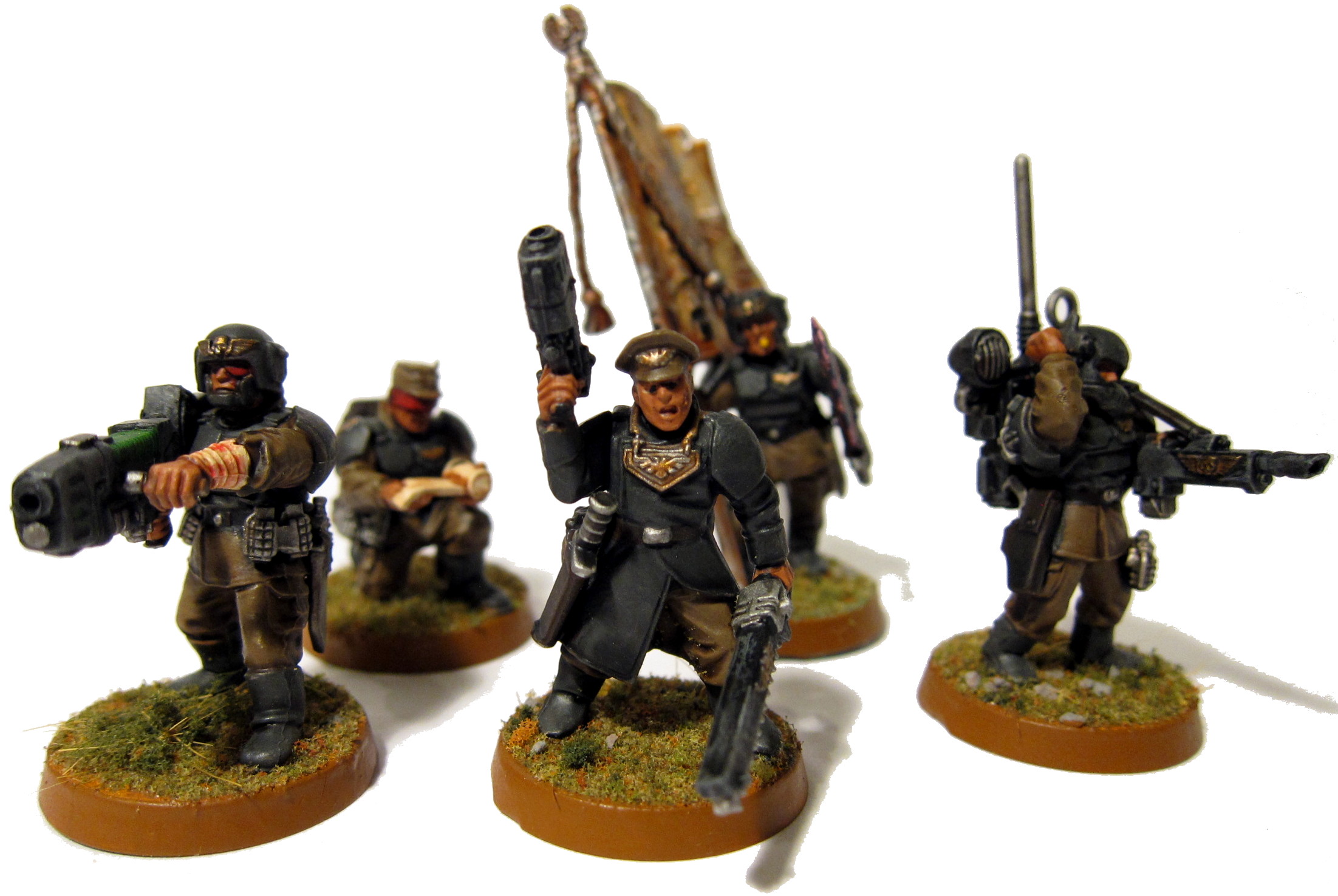
This is the first squad for my long planned IG detachment, the Forest Guard.  They’re a mostly Cadian-patterned Imperial Guard regiment, initially mustered from Forestway, also the original chapter planet of the Kingbreakers, long since burned exterminatus as fallout from the endless machinations of the Legio Apex traitor marines.

These particular guys will swing back and forth between company and platoon command depending on need for the foreseeable future.  In the no-FOC PAGE December Apoc game they’ll probably be a platoon lead and I won’t bother with an IG HQ.  Not a lot of thought went into the armaments and unit.  Their primary upcoming use is that Apoc game, so I’m not super concerned about having the most efficient load out ever.  I’ve also got a bunch of regular Guardsman sprues on the shelves still plus one or two more command squads, so later if I need something I have plenty of options to build it.  Here I was just putting together whatever looked cool and might be useful, like the radioman and medic.  And plasma never goes out of fashion.
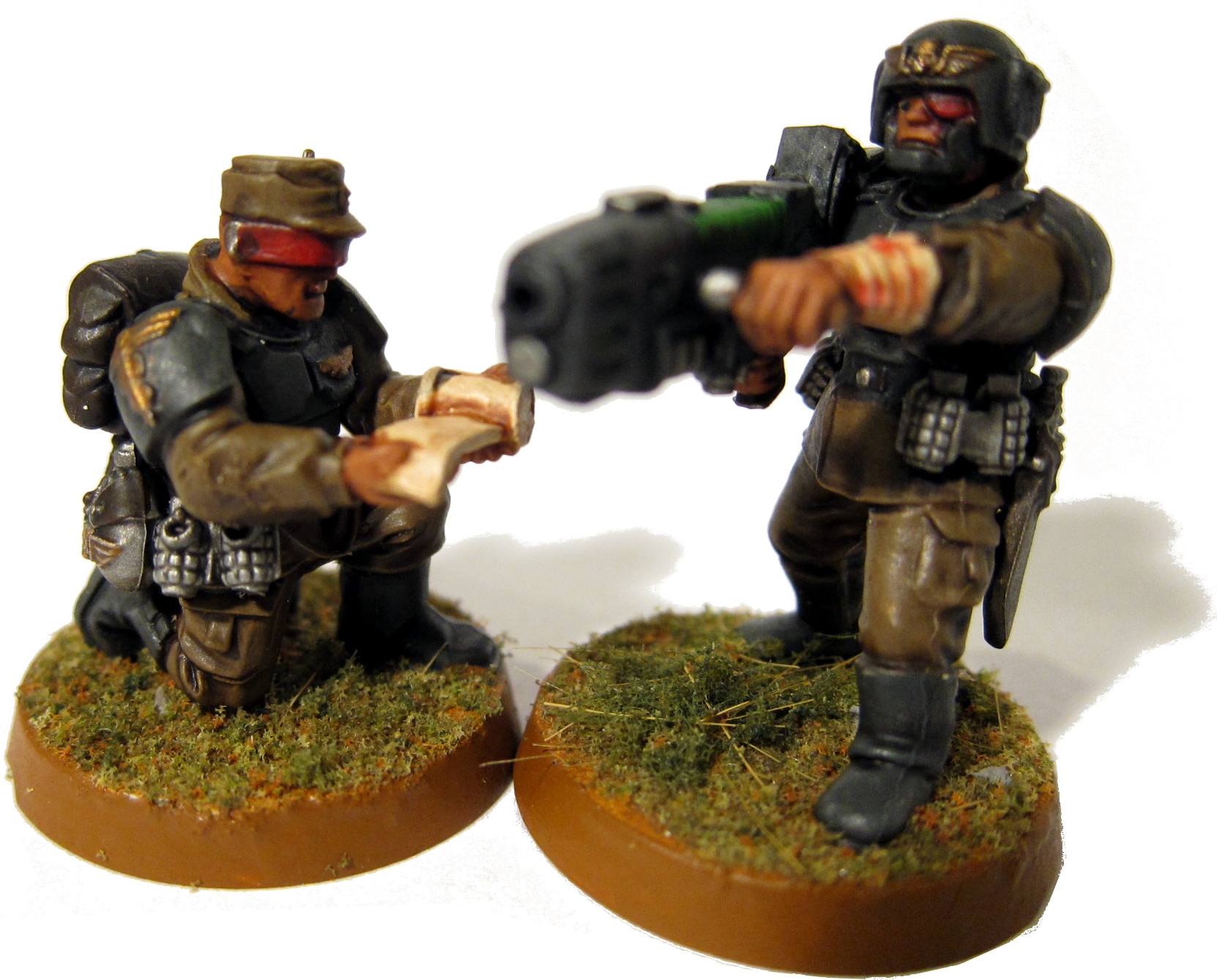
MEH-DIC!
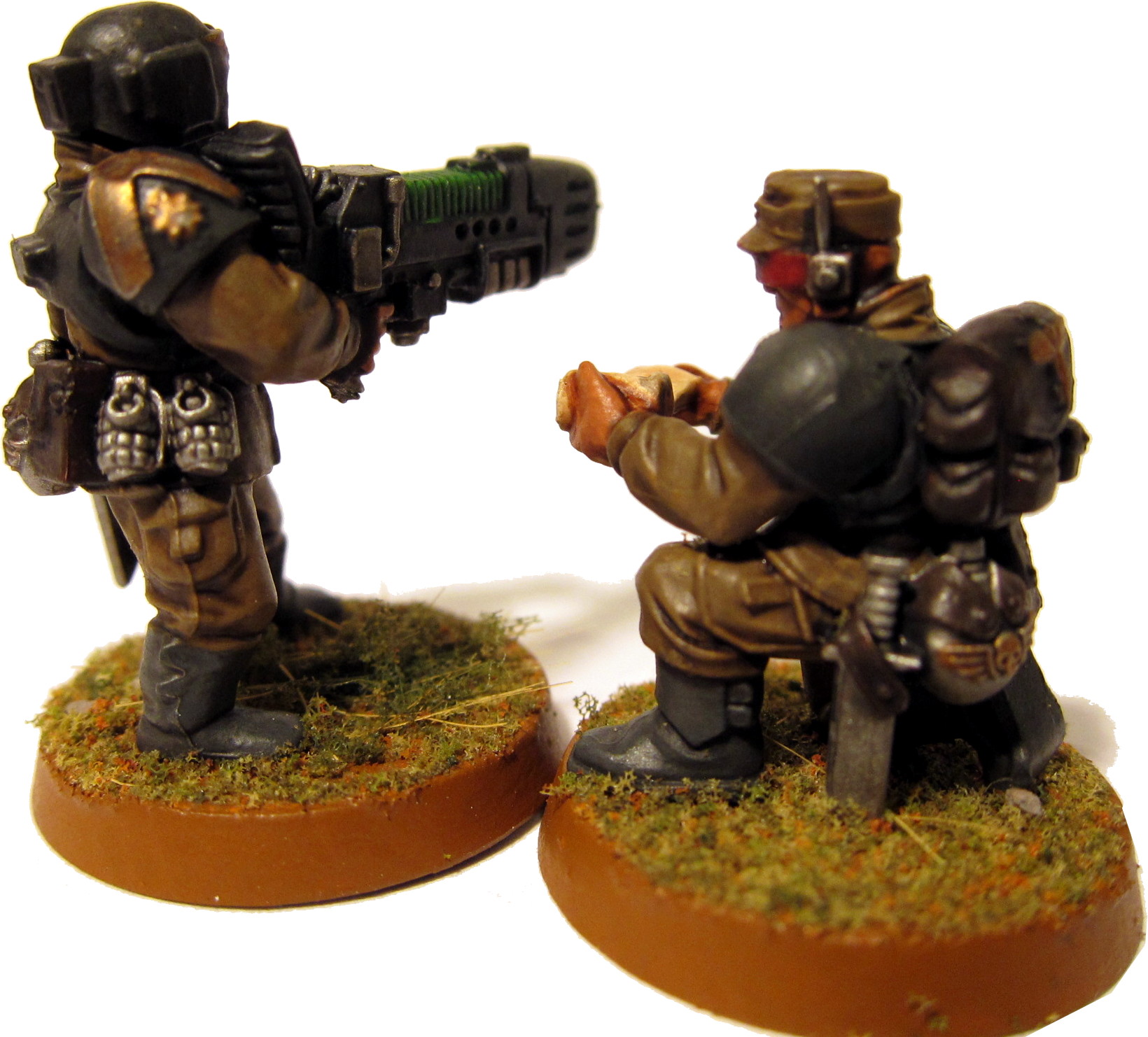
MEH-DIC!

It burns, captain, it burns!

It burns, captain, it burns!

Painting

All in all I’m happy with these guys.  They looked ok, looked ok, looked ok, and then I started putting on washes and they looked great.  In hindsight it’d make more sense to start prototyping colors on more generic, easily replaced, and less prominent dudes, but it turned out ok this time.

The one thing I’m not super excited about is the banner.  I just got lazy with it and should have at least done it up in more colors like the GW exemplars.  That guy’s likely to wind up demoted or even an objective marker once I make up some fancy custom banners, or to have his current banner snipped off and replaced.  Ditto on the banner guy’s power sword, it’s pretty weak.  In general I’m not happy with how I do them, so I’ll have to work on in.  Sometimes the process I used here works well—one of my Librarian’s force swords came out really nice, as did a Sternguard power axe—but often it just kind of comes out flat.
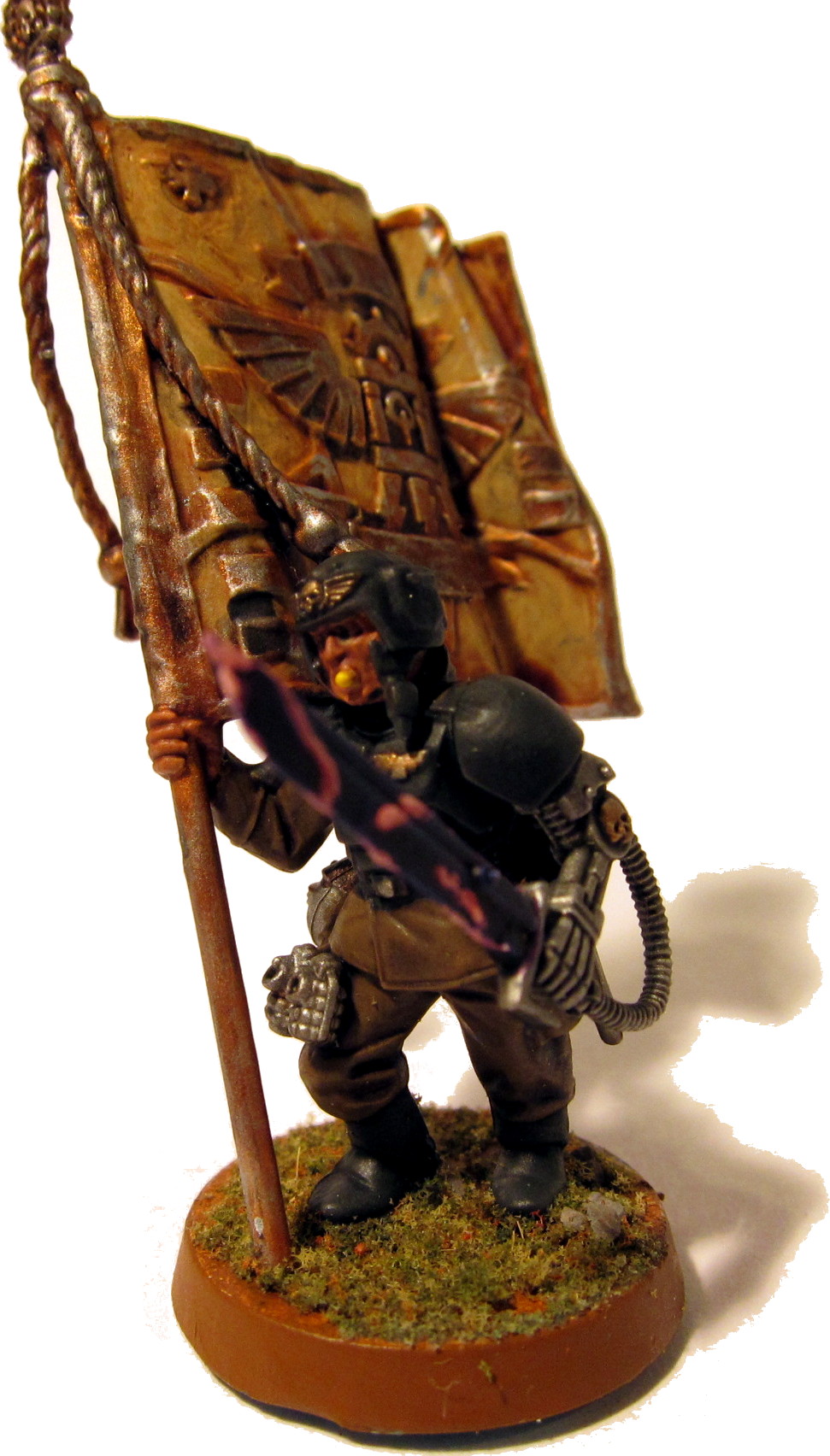
For the corps!

For the corps!

I was explicitly trying to go for a simple, fast process here, both to contrast with my fairly laborious Kingbreakers color scheme and style, and just to deal with the reality of having to do up tons of models to have a viable IG force.  The washes thus are doing a ton of work.  There’s no edging, very little drybrushing, and actually very few colors overall.

I like this scheme and it’s reasonably fast so I’ll probably stick with it.  But if I was going to do a ton of these guys, i.e., a primary army, I would almost certainly spray prime in either the armor or pants colors, probably ideally the latter as it’s more recessed and just slightly slower to paint.  As at most an allied force and probably just an Apocalypse supplementary army though, I don’t feel like getting an expensive can of primer for just that color or being limited to those color options.

Notably, I’m pretty committed to not doing decals on these guys.  The Kingbreakers’ custom decals look fantastic and bring a lot to the custom look of the army, but here it just doesn’t balance out high enough on payoff versus effort to decal a million guardsmen.  Maybe some vets will get the treatment once I have a proper logo drawn up and acquire some more decal paper.  The latter’s actually a hassle to get and print; it’s not super widely available, shipping costs more than the paper itself, and it seems like it breaks down over time sitting unsealed on the shelf (printed decal paper is sealed, just the same as a painted model).
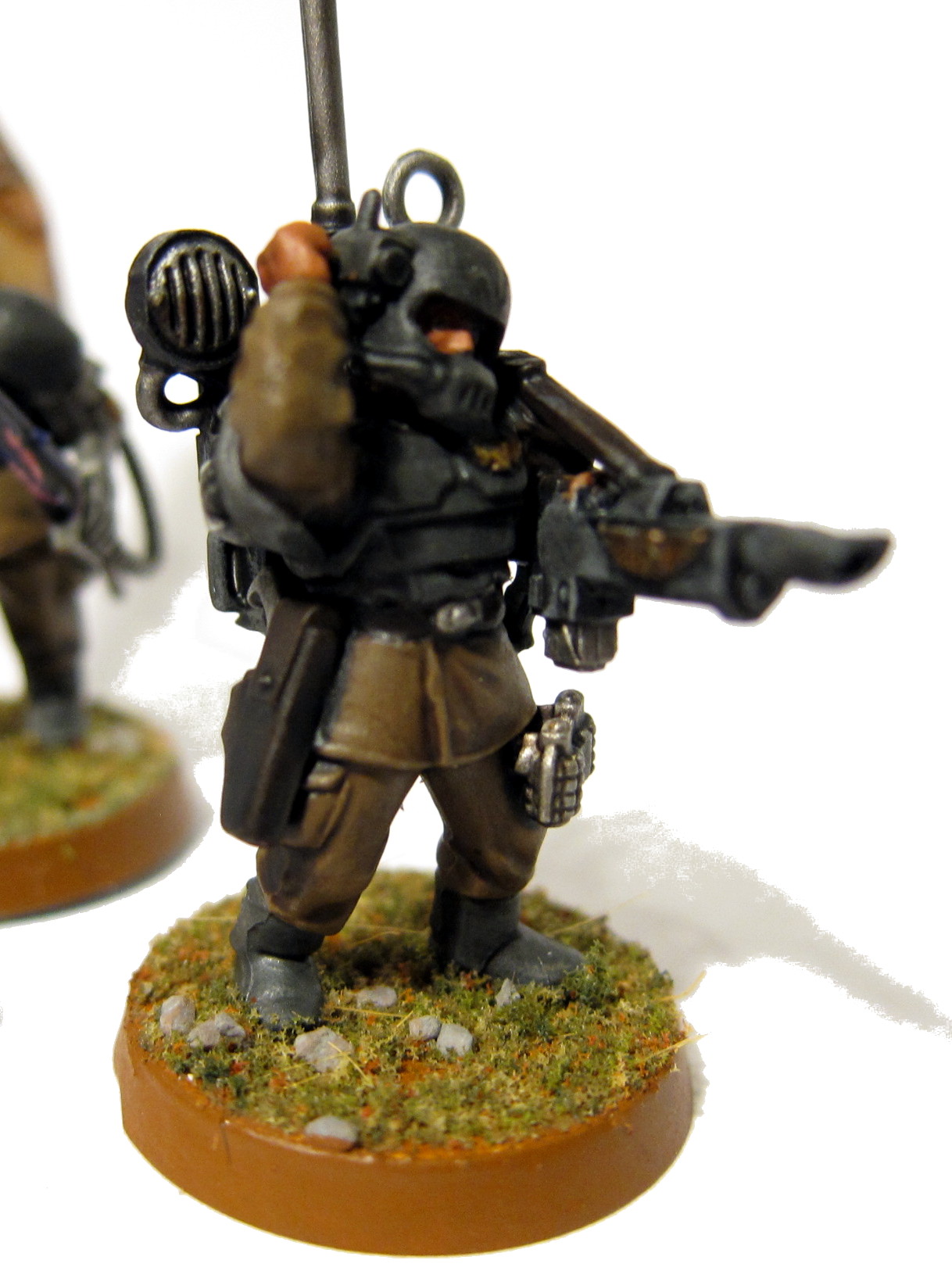
Awww yeah, Ministry of Sound comin' in loud and clear!

Awww yeah, Ministry of Sound comin’ in loud and clear!
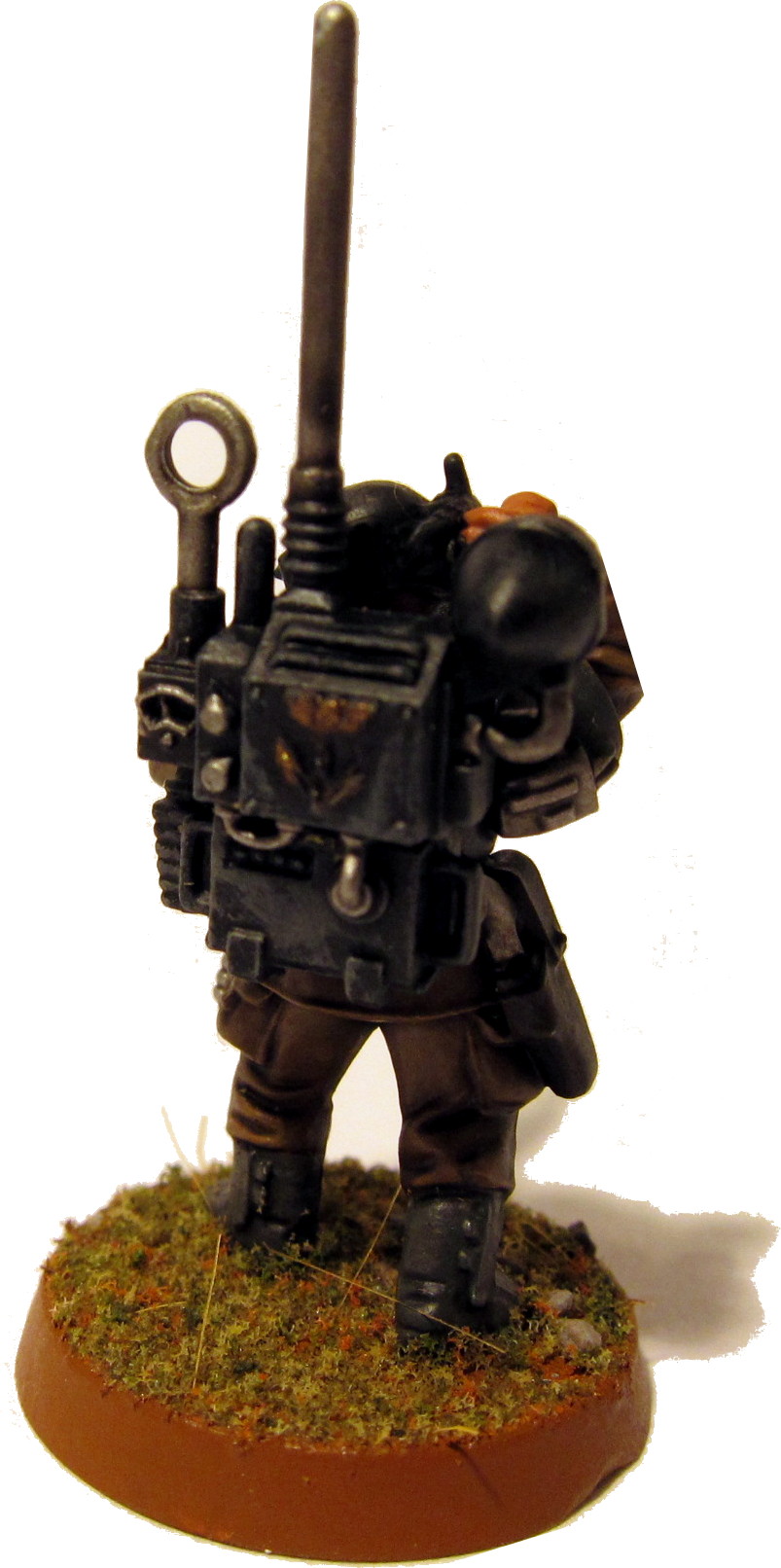
Yep, we got yer dials and your tubes and yer gizmos...

Yep, we got yer dials and your tubes and yer gizmos…

Compared to the Kingbreakers I also went much simpler on the bases here, just base coating and flocking, again thinking about optimizing the process to churn out dozens of these guys.  Instead of fresh basic flock though I did use my cup of scrap, literally a cup into which I brush off all the excess flock, grass, gravel, etc., after I’m done working on models.  That gives some nice little textures here and there as random bits and types of flock get mixed in.  On the Kingbreakers I usually wash even flocked bases to create a dark, decayed, wasteland look as well as blend with my heavily washed dudes, but here I skipped that so the flock would keep more color and bounce.

 Color Scheme

The color scheme came out more Cadian than I was hoping, but that’s not the worst thing ever.  Ultimately the standard Cadian scheme is pretty good looking, and jives with my preferences for more muted and vaguely more realistic colors.  At a minimum though these guys are darker and more grey than a lot of Cadian forces out there.

I originally mocked up the color scheme on Bolter & Chainsword’s Imperial Guard Painter.  That was very useful to play around with ideas.  Many of the more colorful schemes I was originally leaning toward wound up looking more like Blood Bowl paintjobs that I wouldn’t be happy with en masse.
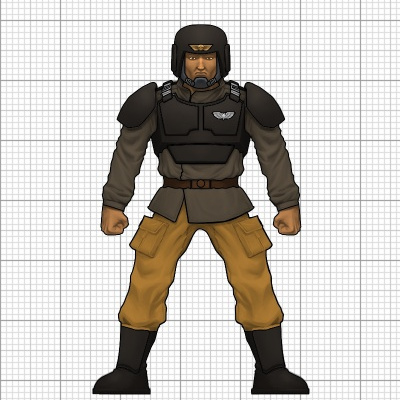
Hut, hut, hike!

Hut, hut, hike!

From that sketch I wound up dropping a color, following the mantra of fast & easy.  It looks great in the image above, but separate  colors for tunic tops and bottoms was going to be a huge extra hassle.  The dark grey armor would undoubtedly also just blend in with the granite top anyway, particularly as on an actual model the armor covers more surface area.  Low payoff for lots of effort so the scheme got streamlined down to two primary colors.  The basic paints for these guys are:

  • Primer: White (Privateer Press spray primer)
  • Tunics and pants: Steel Legion Drab washed with Agrax Earthshade
  • Armor, helmets, and boots: Skavenblight Dinge washed with Nuln Oil
  • Guns, comms gear: Abaddon Black, heavily drybrushed Codex Grey, washed with Nuln Oil
  • Faces and hands: Khardic Flesh (Privateer Press paint) washed with Ogryn Flesh
  • Belts, holsters, straps, packs: Scorched Brown (no longer available), washed with Nuln Oil
  • Blades, canteens, other metal bits: Ironbreaker washed heavily with Nuln Oil
  • Aquilas and insignia: Gehenna Gold drybrushed with Ironbreaker and washed with Nuln Oil
  • Bases: Vermin Brown (no longer available?)

One nice thing is that all of the colors are thick, solid paints, and largely all new GW Base paints or older Foundation colors, so one coat could be passable under a wash, and two coats is smooth.

To Arms!

I’m not sure what’s up next in the painting queue.  Another Kingbreaker Predator?  Drop Pods?  Various top secret, Inquisition-redacted projects?  Piles of Guardsman?  Time will tell!
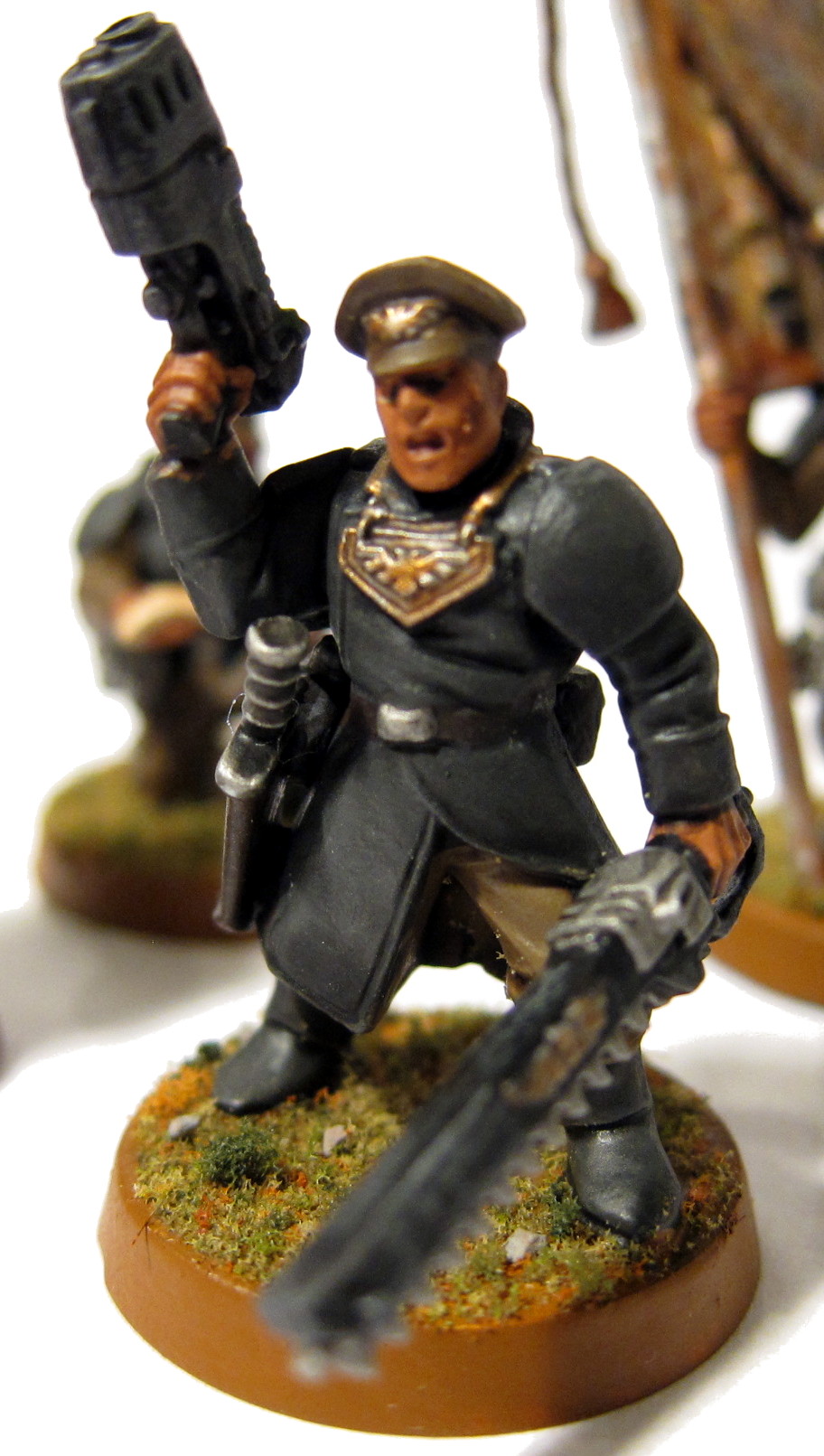
Who run Bartertown?!  Master-Blaster run Bartertown!
Who run Bartertown?! Master-Blaster run Bartertown!

Betrayer

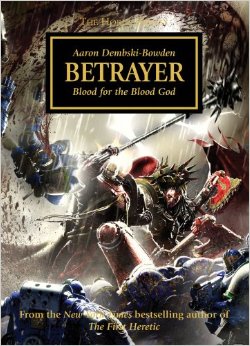
betrayer-coverContinuing my Horus Heresy kick, over the weekend I read Betrayer by Aaron Dembski-Bowden.  I  was a little hesitant to grab this book but did so because it comes up on a number of best-of-series lists, not all of which are reliable (too much focus on action).  Turns out though Betrayer is very much possibly the best 40k/30k novel I’ve read, and certainly among the top.  Part of this I attribute to Dembski-Bowden apparently being an actual player of the game, something I don’t get from a number of the authors.  Not that it’s necessary, but it might bring an extra level of love to the work.

There are no spoilers in these thoughts.

Characters

Here that love’s paid off because he’s done the totally unexpected: Made the World Eaters, Angron, and especially Khârn possibly the most fascinating characters in the entire series.  My hesitation about the book was precisely because by the 40th century they never come across as particularly interesting.  Mindless killing machines, they do what they say—Kill!  Maim!  Burn!—and little else.  Their action sequences are boring, and they have basically no characterization to speak of.  Their appearance also raises a lot of uncomfortable questions, like how could such a bloodthirsty, disorganized fighting unit actually function?

The answer is barely.  This novel really explores in flashback and discussion the degradation of the legion and how costly their every minor victory has become.  A number of the characters spend a fair amount of time trying to come to grips with how precisely they can keep fighting when their extreme lack of discipline leaves them exposed and vulnerable any number of ways.  The action and training scenes demonstrate this well and between that, the characters’ discussions, and a healthy dose of the Warp, it’s an interesting progression that renders the 40k world more plausible (well, within the universe’s basic assumptions).

More importantly, Angron makes a good run here to be the most tragic of the Heresy characters.  That’s a big claim to make given Horus, but the novel makes it pretty credible.  My favorite though is Khârn.  He’s fascinating, and realizing that in the first couple pages is basically mind blowing given that I’d previously never found him particularly interesting.  He has a band of friends, many of them with their own solid characterizations—especially Argel Tal of the Word Bearers—and he has doubts, so many doubts.  Khârn’s so compelling, I’m almost motivated right now to go model up some Chaos Marine champion to represent him (I’m only 50/50 on his actual model).  Khârn’s depth and wisdom come across so well, it only highlights his glee and fury in battle.  The first, brief appearance of his catchphrase at a desperate moment is chilling: Kill, maim, burn.  Betrayer manages to make all of these utter villains extremely sympathetic and then next chapter they’re turning your stomach as they torture and murder with abandon, an excellent feat of writing.

Also excellently done, for the book that had every possibility of being the least humanized and the most purely testosterone driven given its very male lead legions and characters, there are a number of solid women characters.  In particular, Captain Sarrin of the Conqueror has a lot of pages and comes across strongly.  She’s key in manufacturing one of the standout scenes mentioned below, has a number of welcome interactions with her friend Khârn in the heat of battle, and it’s actually really cool to read with what glee and skill she goes about fighting the Imperialists.  In the grimdark future there is war and blood for everyone, not just men.

Fight!

As discussed regarding Know No Fear, 40k and especially the Heresy series has a ton of potential depth to it, and it’s the more character-study oriented novels that are the best.  All too often though they devolve into purely extended action sequences, as that novel does.  Here though a perfect balance is struck.  The action and character studies are so interwoven throughout the text, and often set within each other, that Betrayer never becomes a drawn out, boring slugfest, nor does it ever slow down and become purely dialog and thought with no chainswords or powerfists.  In terms of the technical execution of the plot and characters, the text’s arrangement is really well done.

Great Scenes

On top of all the overall excellence, the novel has a large number of great scenes.  Just a few of the most memorable, holding back the details:

  • Lorgar’s desperate battle to retrieve Angron, and the latter’s desperate struggle to then save the former.  This is the best primarch battle scene I can recall.  Forget inhumanly fast sword strikes and mega-punches.  There are goddamn vehicles being thrown like toys, and it’s not the least cheesy.
  • The legion’s censure of Delvarus after the battle of Armatura.  This opens with a great tense hangar bay standoff, once that captures that might alone is not always right, then pages later comes back with a darkly beautiful scene of fraternity, regret, and forgiveness.
  • Lhorke’s remembrance of Khârn and Argel Tal in the gladiator pits.  It’s a touching view of two soul brothers, ultimate warriors not yet mindless death machines, and has a rare touch of fun and mirth among a life of constant war.
  • Lorgar and Angron discussing the latter’s pre-heresy fight with Russ.  It has a sadness and quiet to it that’s heartfelt, with Lorgar pained because Angron doesn’t understand, and Angron pained because he does but can’t, shackled and crippled by his past.

Summary

Basically, go read it.  A fair bit of Heresy background and 40k foreknowledge is required to really appreciate everything.  Even having read a bunch and knowing a lot of 40k lore, even I wish just a little that I had read more of the Heresy series before reading this to catch all the references and character history.  But it’s got depth and action to spare so this is a minor concern.  Betrayer is an awesome novel that every 40k fan should really appreciate.

Kill. Maim. Burn.

Kill. Maim. Burn.

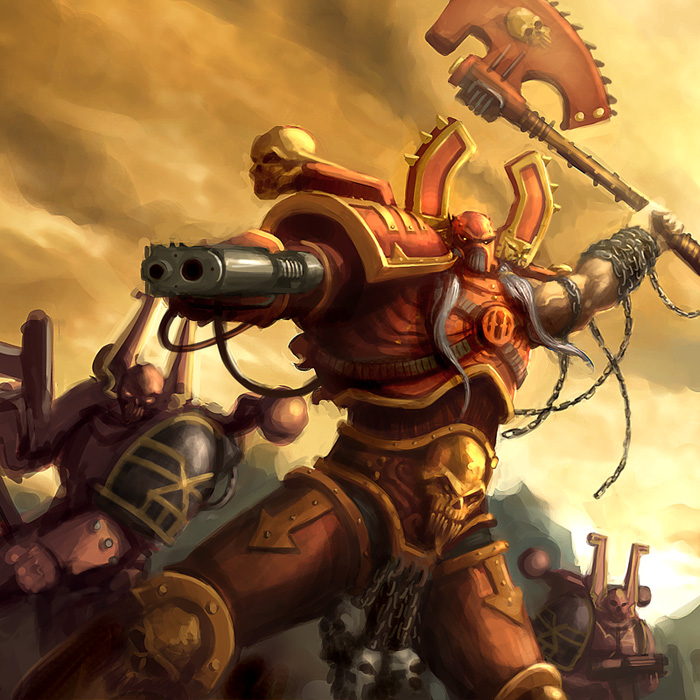
Update: Total sidenote, if the Khan model looked more like this conversion I’d be all about it.  The official model though is just a little to goofy and busy looking.  By absolutely no means the worst of the older GW sculpts, but after this read I really hope he gets an update or Forge World model sometime to be a bit more serious and dramatic.

Know No Fear

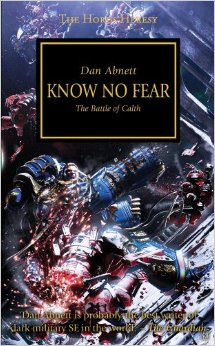
know-no-fear-coverLast night and this morning I read the nineteenth book in the Horus Heresy seriesKnow No Fear by Dan Abnett.  The book records the first Battle of Calth, in which the Word Bearers attack the Ultramarines, the latter’s first intimation of the recently begun Horus Heresy.  There are no real spoilers among the thoughts below.
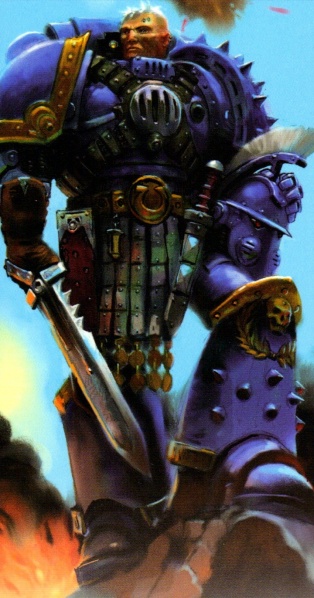
Battle

I was prompted to pick up this book by the recent limited release of the twenty-sixth novel in the series, Unremembered Empire, also by Abnett.  Previously I had only read up through the 4th book of the series.  Each of those four is solid to very good, and Unremembered Empires has been getting great comments, so I was intrigued to get back into the series.  That said, 40k books are highly variable in quality.  Some of the overriding themes and writing are great.  Many of the books though are poorly written battle reports of childishly imagined characters.  So, despite my love of the setting, I have no interest in reading all twenty-two of the other novels to get completely filled in before Empires comes out in paperback six months from now.

Looking to cherrypick the series, I read Know No Fear because it’s by Abnett, one of the stronger 40k writers, and it appeared on a few recommendations of must-read books in the series.  I can’t say I was disappointed.  It’s definitely among the stronger 40k books and a good, solid read.  The battle that occupies probably two-thirds of the novel is well done and moves along, never becoming the sort of tedious recounting better left to action movies from which many of the novels suffer.

That said, the battle does occupy two-thirds of the novel, and it’s definitely not the most interesting part.  Solid as the book is, it highlights some of the basic self-imposed limitations of the 40k writers.  The universe has the depth and breadth to incorporate some really great themes, and the novels often touch on these, but they never quite let go to really explore those.  Many, especially Abnett’s, start off with really interesting world and character building, and then devolve into a protracted fight sequence.  Know No Fear falls precisely into this fate.

World

That battle stuff is ok and entertaining, but what I really like is the first part of this book.

I think the Heresy series has a number of strategic factors driving its immense success.  One of these is the large, protracted, epic story arc.  It takes a really solid fabric and epic space opera universe to soak up 26 novels, bunches of short stories, and still have basically no end in sight for the inevitable conclusion everyone knows must come.  Another is that people enjoy reading history, which all of this is for players of the game.  There’s a pleasure to be had in knowing the basic outline but getting filled in on all the details.

A perhaps less obvious factor is that the series proceeds from a point in time before the 40k grimdark sets in.  At this time humanity is still making progress, there is both a hope and a reasonable expectation of a brighter future, the Imperium is not thoroughly downtrodden and oppressive, and not everything is war.  Ultimately people can only read so much misery and darkness before they tire of it.  The Heresy books, probably especially ones like this set around the prospering and civilized Ultramar, don’t have that same crushing bleakness to their background.

That brightness and engagement with the larger civic enterprise of building the Imperium also brings a lot of variety and texture to the story.  Among the current-timeline 40k novels, it’s no accident that the most popular books and series are based around the Inquisition and the Imperial Guard, like the Eisenhorn and Gaunt’s Ghosts books.  Those settings and characters offer a rich world with many different types of people and places.  In contrast, despite being the most popular faction in the 40k universe, Space Marines often make boring novels.  They kill stuff and hang out on their battle barge, and repeat.  They’re also all pretty much conditioned clones of each other, with comparatively limited variances.

The Heresy books step around that limitation.  The novels feature a lot more world building, characters outside the chapters, and the rebellion itself induces such a large fault line as to create differences among the characters.  I actually really enjoyed the “boring” stuff opening Know No Fear, like Space Marine Captain Ventanus and Sgt Selaton zipping about in a Landspeeder, getting stuck in traffic on their way to argue with the local dockworkers, or discussing the Imperial project with Tetrarch Lamiad in a futuristic, optimistic, empty museum.

Ventanus isn't sure what's going on, but he's sure he's not going to like it.

Ventanus isn’t sure what’s going on, but he’s sure he’s not going to like it.

Trans-Human

The other thing I really like about Know No Fear is that the opening portions really focus on the idea of the Space Marines as trans-human, and what that means.  To me this is one of the most interesting themes in 40k, and a major part of my love with the Space Marines.  In fact, this book repeatedly and often uses that specific term trans-human, which sticks out for me as a modern, civilized, scientific term.  Not that many people in the 21st century world would be familiar with this word, or are thinking about what it means, even though we really are approaching having to deal with such entities.  Similar holds for the 40k universe, where the word is rarely used, the Marines are much more frequently cast as super-soldiers, and people are pretty much concerned with not dying, as opposed to what living means.  In M30 however, this is a real, high level concept that occupies the more intellectual and world-cognizant of the Marines, this is a world thinking about the future and lofty ideas like what it means to be human.

Specifically, the term’s use highlights a key premise at the start of the book, that the Great Crusade is wrapping up, and now humanity needs to figure out how to go from there.  As the Space Marines perhaps most engaged with the world outside combat, many of the Ultramarines in Know No Fear have many discussions in the opening sections beginning to probe their thoughts about their place in a universe consisting of more than war.  What does it mean to be a defender of humanity that is not truly human?  Further, what happens if such a defender is no longer needed for defense?

Ultimately these are the kinds of questions the Heresy as a whole really gets to at its best points.  If there are men that truly know no fear, then there are also men that know only fear.  To me that is the central driver of the Heresy, those are the traitors.  Most simply fear death or pain, though they would never say it, and will make the most unholy bargains to avoid it.  Others fear powerlessness, and what could be more powerless than the universe’s greatest warrior in a time that knows no war?  Many fear being deemed inadequate by those they venerate most, as is clearly how the Word Bearers feel after their multiple rebukes by the Emperor.

Know No Fear gets at many of these points, and it’s the true strength of the book.  The opening sections feature not just a literature discussion of those topics, but the ultimate philosopher warriors of the 30th century, the Ultramarines, explicitly discussing them.  There’s a lot of talk about their Primarch’s attempts to prepare them to be useful for running governments rather than crusades.  In a great, telling display of the Ultramarines as intellectuals all, even the sergeants discuss how comparatively simple, bloody-minded Legions like the Word Bearers and World Eaters will fit into a peaceful age.

All of this stuff is great.  It’s what made Flight of the Eisenstein my favorite 40k novel, and it was really good to read in this novel.  It’s just a shame it’s all mostly dumped for a 200 page battle.

Style

A small thing I also really liked about this novel is that it opens with a crazy style, interspersing cold historical record in a very analytical framework of timestamps and notes with Primarch Guilliman’s much more poetical, abstract thoughts.  It’s a little tough to follow so I’m glad it phases out after the first chapter or so in favor of a more straightforward style of novel, but it’s really good.

Similarly, the internal looks at the Primarch are really enjoyable.  A good example is an early sequence of him working on what the reader will recognize as notes for the Codex Astartes, still far in the future, while he also thinks about his chapter masters and how even after all they’ve done they still don’t fully understand his powers.  Pretty awesomely and quite appropriately, Guilliman is actually one of the softer voices in the novel, and brings a fair bit of the humanity and even humor.  It’s small, but there’s a really nice point of comedic relief where he walks into a sanctum of his, finds an Ultramarine waiting there for a meeting with him that he had forgotten about for hours and hours, has a brief, unrelated discussion with him, and walks back out with the Marine left still waiting for the meeting.

Abnett also does a really good job here of making the Ultramarines stand out with their own unique character.  It’s definitely the most appealing I’ve ever found the poster boys of the 41st millenium, and they’ve always appealed to me a little for maintaining Ultramar as the bright point of the stagnant Imperium.  The constant scholarly discussions and Socratic teachings among themselves in all the small moments stand them apart, and the constant refrain of “Theoretical?” and “Practical?” in analyzing every problem gives them a voice and tone unique among the Legions.

Summary

All in all, I’m glad I read Know No Fear, and it meets my expectations of Abnett’s better 40k novels:  The inevitable extended battle sequence is good for what it is, but the opening part delivers the goods on world building and exploring the deeper, more interesting themes of the 40k universe.

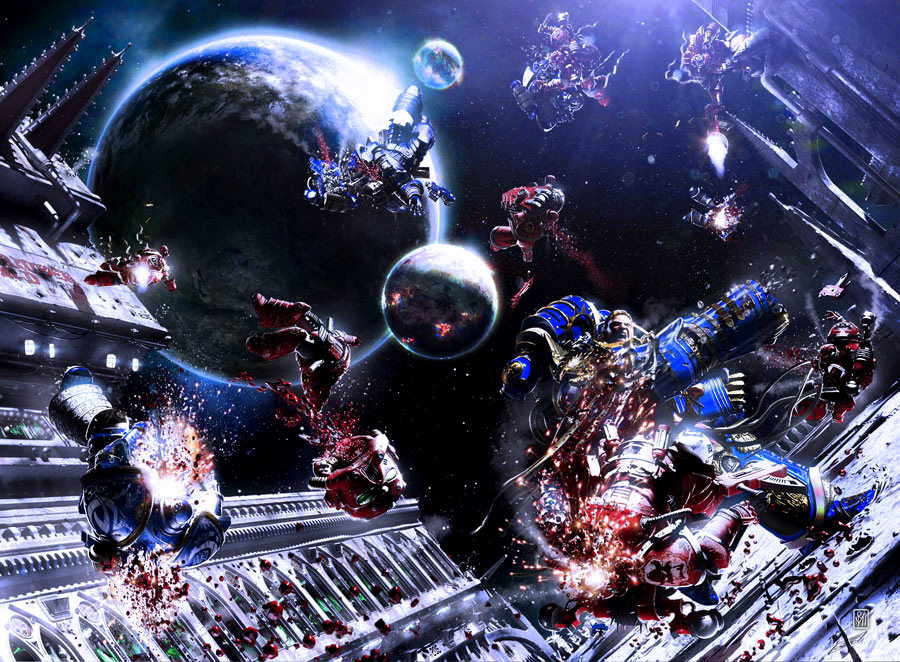
I will say, the Heresy covers are getting harder and harder to tell exactly what the hell is going on.

I will say, the Heresy covers are getting harder and harder to tell exactly what the hell is going on.