Nightmaw

For the holidays and our annual club Apocalypse game last week, Jason and TJ organized a Secret Servitor among a good number of the PAGE 40k players. Everybody was secretly assigned a random person, and painted a character or other 40k model or accessory for them. I was assigned Jason himself.

At first I wasn’t sure what to put together, as he doesn’t play Imperials anymore, and what few traitor Marines he does field are elaborately built and quite unique, so I didn’t have any good bits to throw at a unique model. Then I remembered I did have a relatively uncommon and distinctive Daemon-appropriate model laying around: Nightmaw, from Forge World. I had gotten him to be basically an NPC and/or objective for the Solypsus 9 campaign but never got around to putting him together, so I’m happy to see the model put into play.

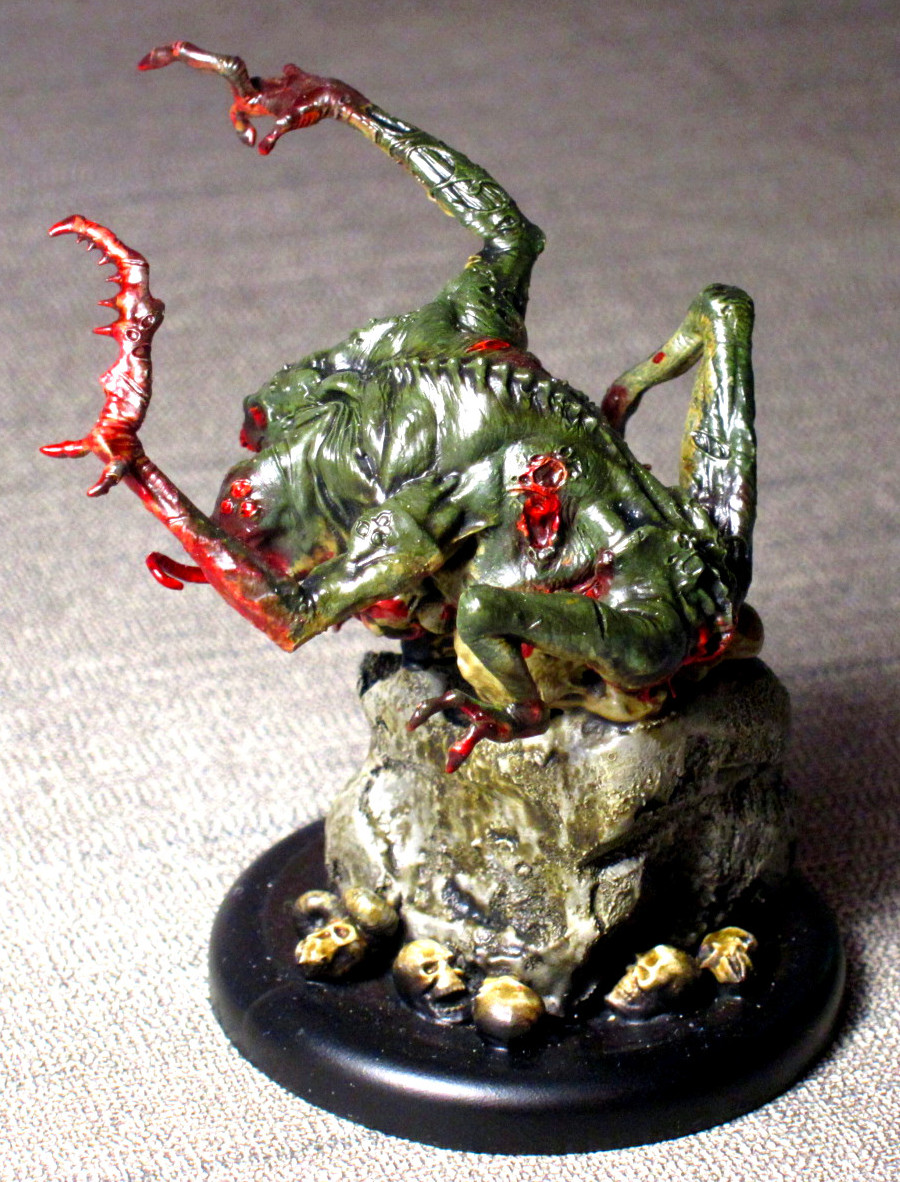
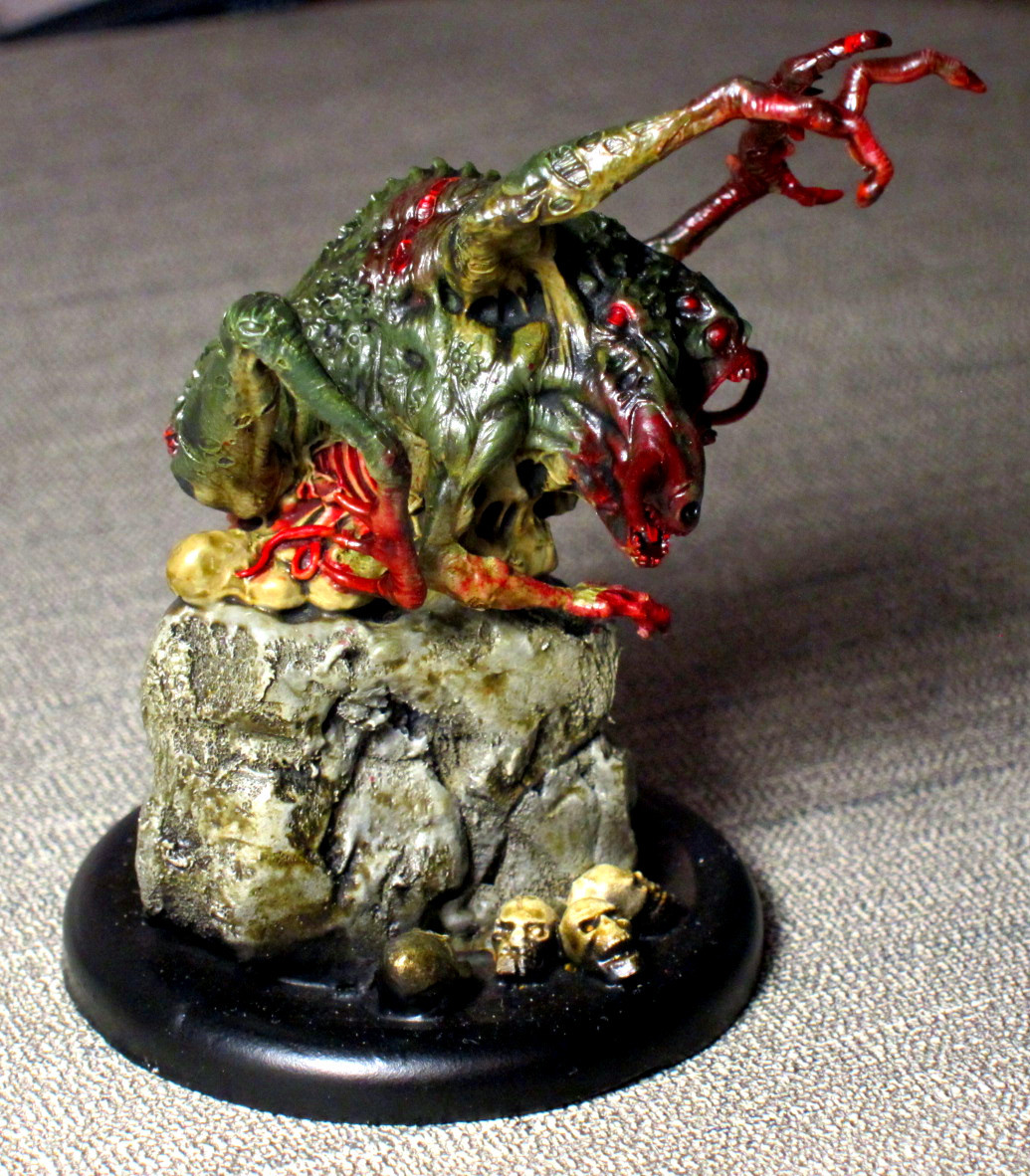
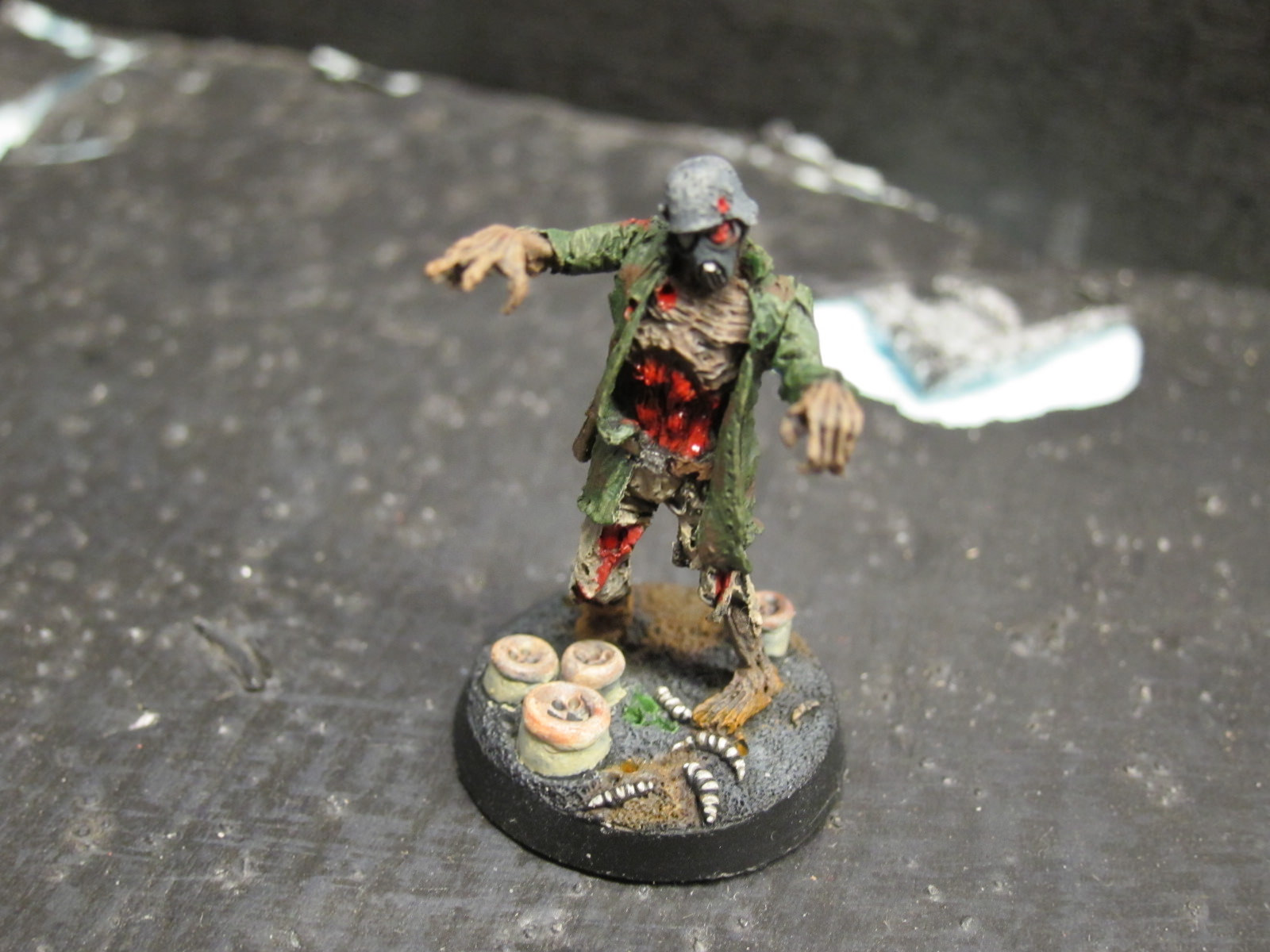
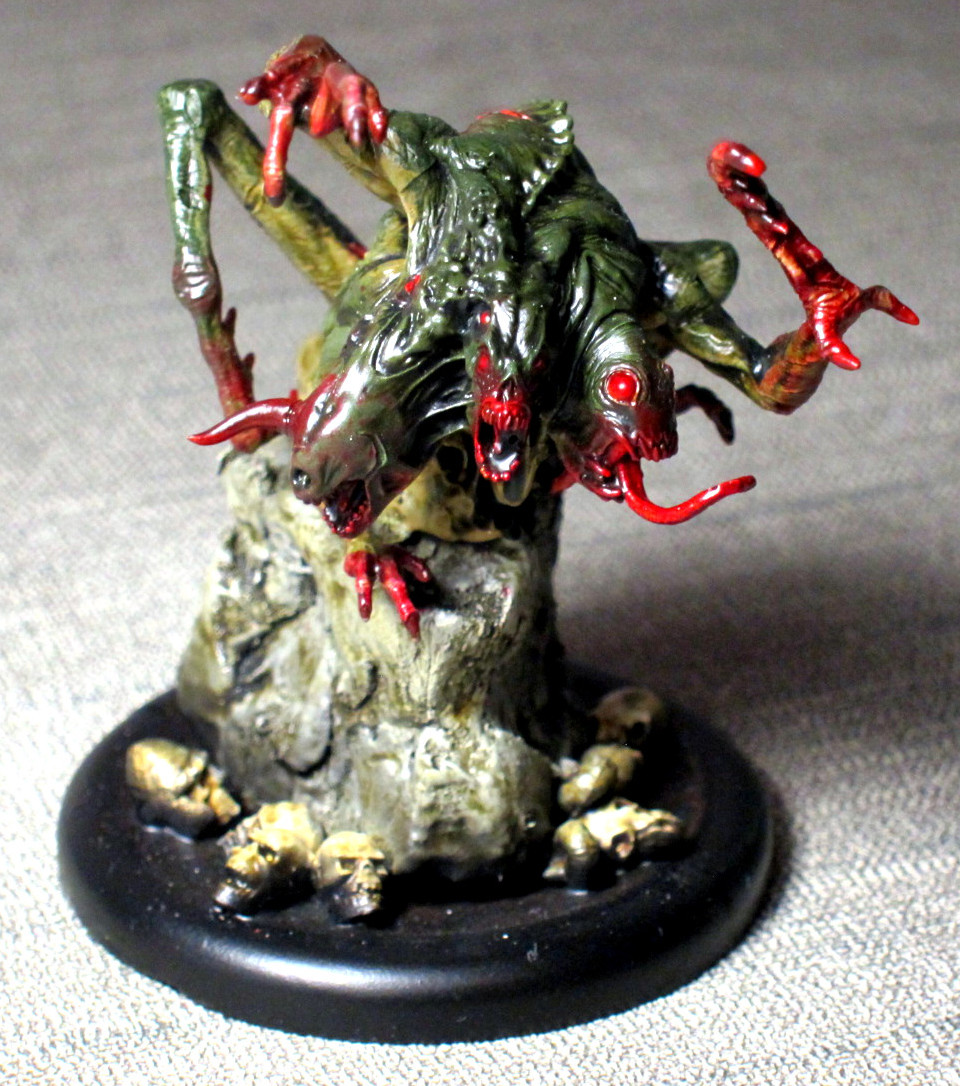
This is the final product, my first model painted for 2016:

front

left

right

Backstory

The Nightmaw model comes with an infantry character named Sayl the Faithless, and they have an excellent official story (from Forge World):

Sayl is pre-eminent among the Dolgan tribe, and his rise to ascendancy began with his allegiance to Schalkain the Vile, as one of his seven seer-apprentices. Sayl’s honeyed lies turned each acolyte against the others, and fanned the flames of suspicion into murderous strife. Eventually Schalkain was manipulated into conducting a dark rite involving Sayl and three fellow ‘loyal’ apprentices which resulted in Schalkain’s horrific death at the hands of a daemon beholden to Sayl, while the three surviving acolytes were twisted into a terrible beast known as Nightmaw. Hated and feared, Sayl the Faithless and Nightmaw now march alongside Tamurkhan the Maggot Lord.

I mean, honestly, if you’re going to hang out with a guy named Sayl the Faithless, you’re basically begging to be turned into a Gollum-wannabe…

Painting

Painting him up I used my airbrush quite a bit, spraying the tan underside, green topside, grey rock, and black base rim, starting from a white primer. The blood paint and wash wound up a bit too thick, so coloring details of the claws and teeth were lost, but he looks super gore-drenched. As Jason exclaimed approvingly “Aw, he’s grooossss!” I debated a long while about how to wash the model, and eventually went with Athonian Camoshade over everything. That turned out to be a good call, it tied everything together nicely versus a black or brown on the rock. A couple layers of it went onto key green sections like along the vertebrae to accentuate those details.

I definitely need to switch out my dull coat as he came out shinier than I would have hoped, just like my Terminators did. I was hoping it was a question of spraying too much on them. Some of the green variations are also a bit too subtle, some of the texture and other bits would show up better in photos if they were more overt. The mud brown base got washed too thickly and caught a bit of overspray while doing the rim, so it’s too black and doesn’t stand out from the rim, especially in photos.

But I’m super happy with how the rock turned out. It’s a chunk of pink foam carved up and then coated in liquid greenstuff to give more texture and protect from the primer spray. The base physically also turned out well. I didn’t want to use the stock base because it’s square, a 40mm base would have been too small for the skull collection, and 60mm looked too big. So I wound up Dremeling the bottom off an empty 50mm vitamin bottle I had laying around, which turned out near perfect. If I did it again I’d try to find something a bit deeper in order to pore some resin water effect in there and make a nice little creepy grotto, but it probably wouldn’t change the general look and feel that much.

Overall I’m pretty happy with this guy, and it was entertaining to paint something besides Marine armor.

In-Game

Appropriately, in his debut, Nightmaw lurked by some rocks throughout the Apocalypse battle royale and survived to the end. Quite unlike essentially all of the Kingbreakers. Maybe I should consider more deeply the powers of the dark ones???

First X-Wing Tournament: Redcap’s X-Mas Wing

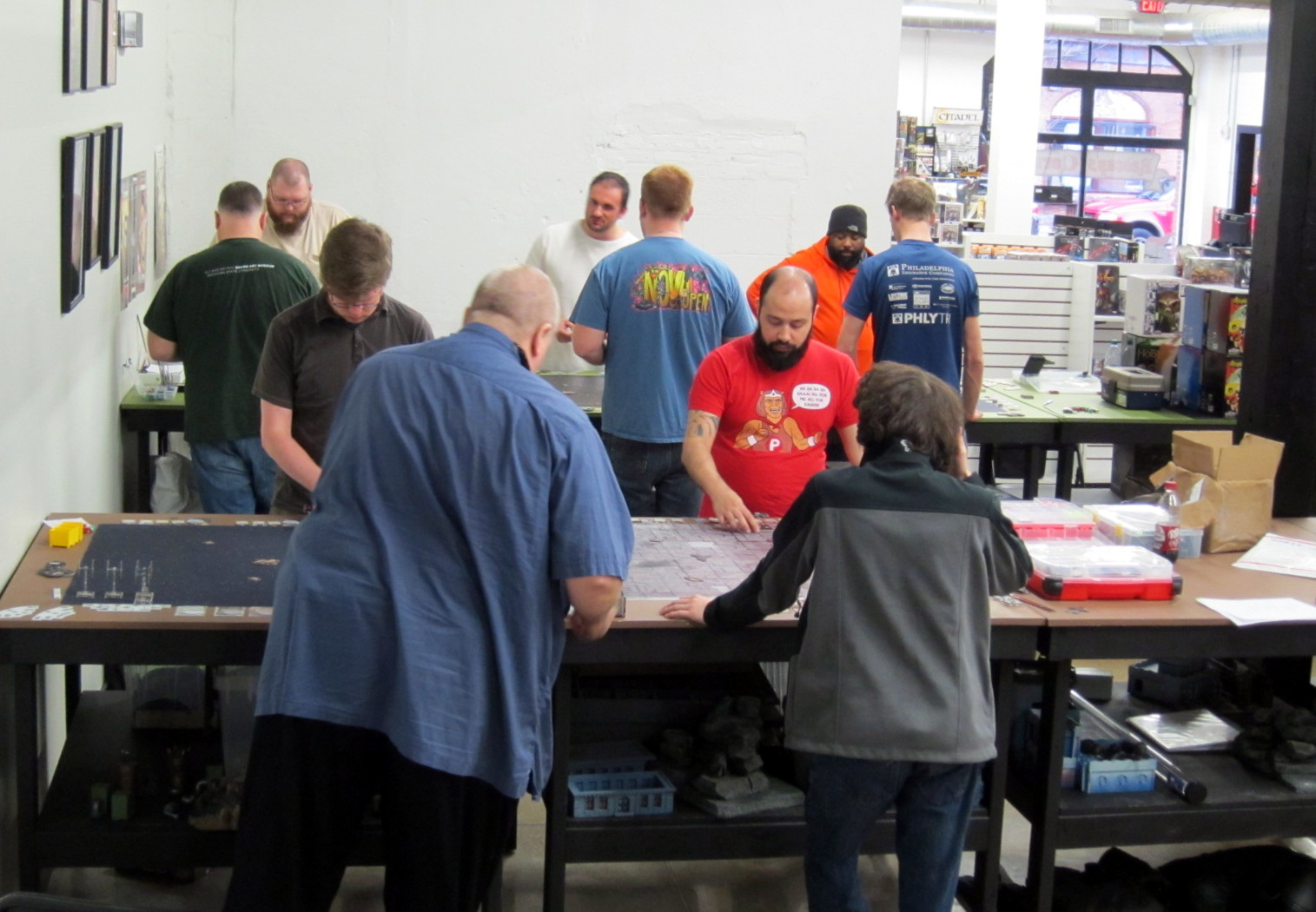
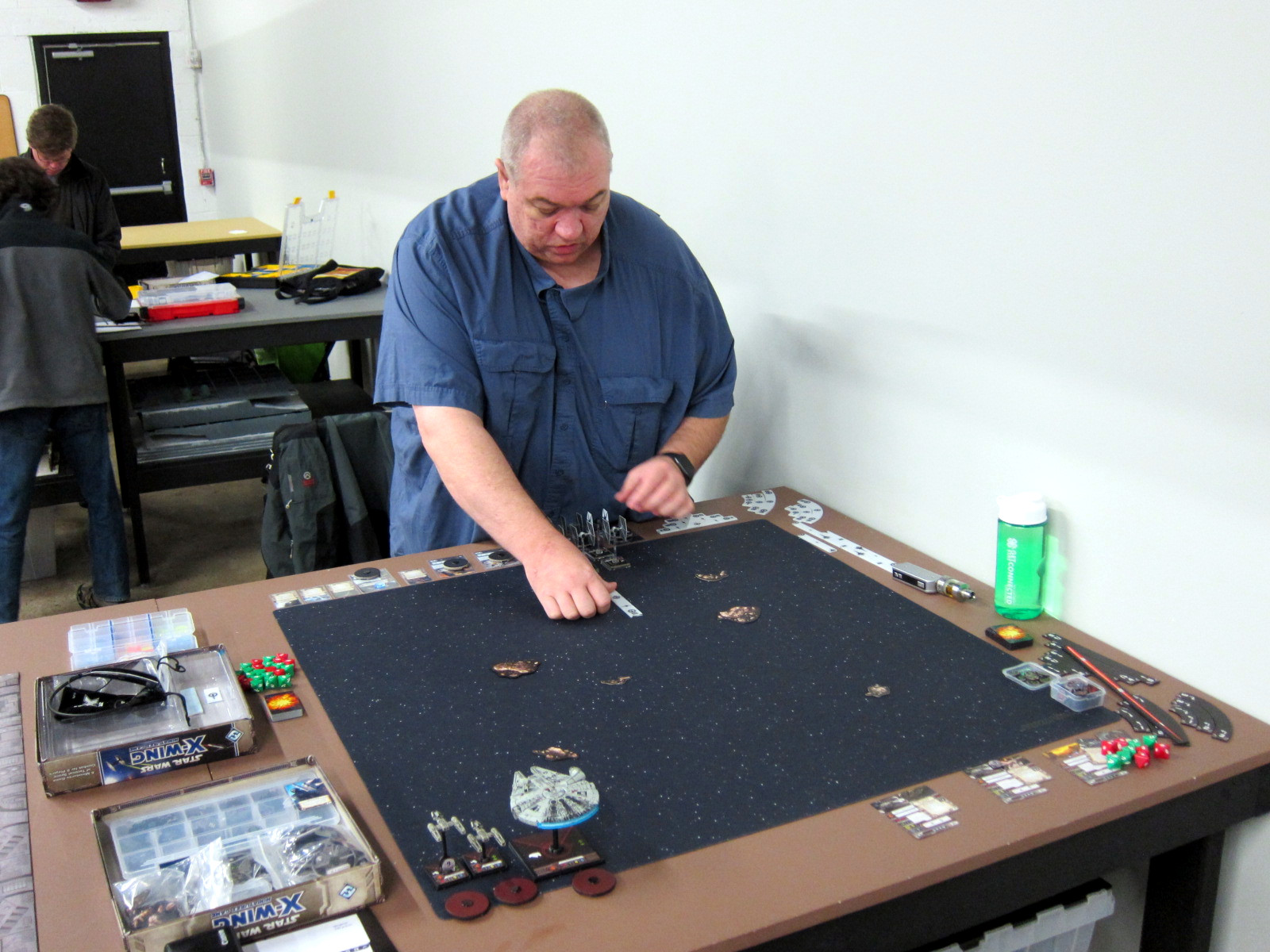
rebel-alliance-iconAfter resisting for years, a couple weeks ago I finally caved and started playing X-Wing Miniatures. Yesterday I entered my first tournament, X-Mas Wing at Redcap’s Corner. Fourteen players were there for some fun, low-key Boxing Day dogfighting. This is my very first X-Wing battle report!

Just a few more pictures than those here are in the gallery. Unfortunately, one downside of X-Wing having essentially no downtime is that it’s near impossible to go grab pics of other games.

Tournaments

Going in I only had two “real” games under my belt, a few more against a fellow brand new player, and a couple solitaire games against myself (I won!). Put that way it sounds a bit ridiculous to enter a tournament, but as long as you’re solid enough on rules to not impair your opponents’ experiences, and prepared to lose terribly, I think tournaments offer a couple things to a new player:

  • You’re guaranteed a couple games in rapid fire fashion, no pick-up night downtime and immediate opportunity to apply and test new lessons;
  • Assuming the pairings are done correctly, by the end of the event you’re guaranteed to be playing with opponents of similar ability;
  • There’s no better way to learn rules and strategies than playing with strangers;
  • There’s no better way to connect with new people and groups for your game.

As an organizer of a substantial number of (40k) events, these are observations I wish more people would realize and give tournaments and other organized play a try. Although perhaps less true for some other game systems and the very occasional less-friendly community, I’ve hardly ever found miniatures players to be anything but excited to have a newcomer out and ready to teach them the ropes.

Pew pew pew!

Pew pew pew!

Squadron

Given my inexperience, I kept my squadron list really simple:

Chewbacca (50)
YT-1300 (42), Marksmanship (3), Gunner (5)

Gray Squadron Pilot (26)
Y-Wing (20), Twin Laser Turret (6)

Gray Squadron Pilot (24)
Y-Wing (20), Blaster Turret (4)

Gray Squadron.

Gray Squadron.

I had been playing with Chewie + two plain Rookie X-Wings but switched to these Y-Wing escorts just before the event. The X-Wing list is more fun to fly, but arguably more demanding to fly. My theory was that this triple turret setup could hug the board edges to hamper my opponents’ maneuvering while I would be able to put shots on all around with no fancy flying needed. The Blaster Turret is perhaps a weaker weapon, but the idea was that its range 1–2 would complement the range 2–3 of the Twin Laser Turret, ensuring I always have range from at least one Y-Wing as all three fly around in a block.

The key underlying theme is to keep it simple & robust. There are no fancy abilities and few actions that need to be remembered and applied tactically, just some simple weapons and straightforward buffs. The squad is also robust, with a lot of hull points and shields plus Chewie’s ability to ignore critical damage. To that, the other reason I switched is I believe the Y-Wings are more survivable than X-Wings, though I haven’t done or looked up the math on hull points versus agility.

There are definitely huge weaknesses with this squad—autothrusters immediately come to mind. It’s not for no reason that the 2014 World Championships featured a YT-1300 in 25% of the Rebel lists, while in 2015 it was in 0% of the top lists. Similarly, the board edge strategy likely wouldn’t really hamper better players. But with this effort I’m hoping just to stay in the tough games long enough to learn something and not lose embarrassingly, and to beat the other new and lesser-experienced players who overburden themselves with overly fancy lists or tactics. So I stuck with my tried and true strategy for any new miniatures game: Keep it simple & forgiving.

Game 1: Swarm

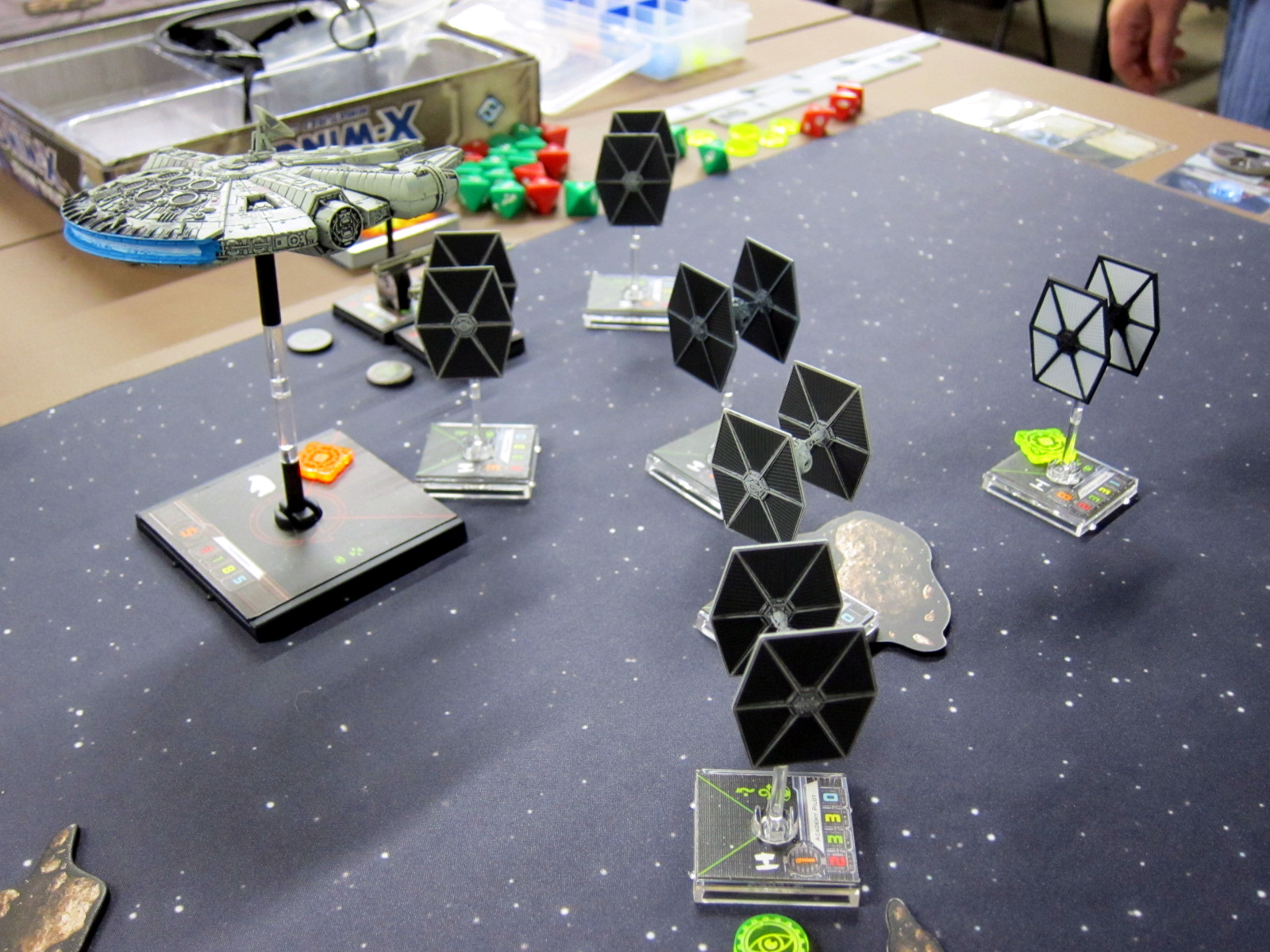
First up was Troy and his 6-strong TIE swarm, using several of the new Gozanti carrier pilots. I stuck to my strategy here of hugging the board edges. Unfortunately I stuck to it too hard, misgauging distance and flying a full-strength TLT Y-Wing right off the board when I blew the turn in the far corner by literally millimeters… Meanwhile, the TIE fighters are so agile that they did not seem extraordinarily hampered by the board edge. Ultimately I got tabled and only eliminated two of Troy’s ships, but without that error I should have been able to finish off a couple more and at least put up a halfway respectable showing.

Troy starts moving his new swarm.

Troy starts moving his new swarm.

Stay in formation!

Stay in formation!

The swarm arrives!

The swarm arrives!

Game 2: Brobots

Next was Adam and his tricked out double Aggressors. He came straight at me, and I quickly abandoned my edge hugging strategy. I was worried his primary weapons would rip me apart while he bounced back and forth over me k-turning and using his abilities to largely ignore the stress. So I fled in fear like a coward…

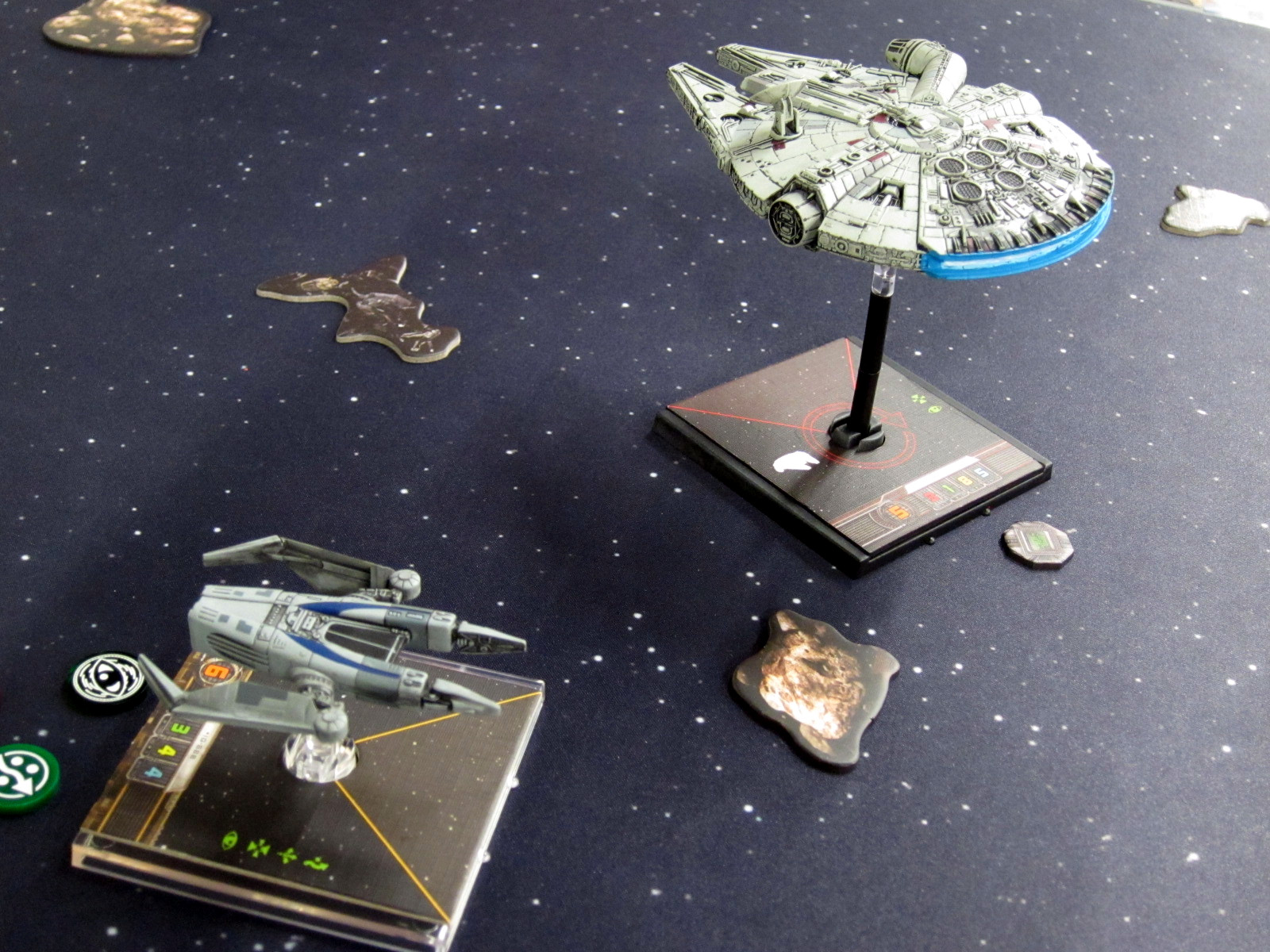
Unfortunately my formation was too tightly packed, particularly with an asteroid right in the way, and I suffered for several turns with poor flying as I bumped into myself, asteroids, everything. Once things opened up though I was able to move better and do some damage. This wound up an extremely tight game, with Adam eventually prevailing at 75 points over my 74 (and him starting at 98 points versus my 100). Key to this was concentrating my shooting as much as possible on a single Aggressor until it was eliminated, halving Adam’s firepower, rather than spreading damage across both of them and taking all his shots the whole time. The YT’s maneuverability was also critical, as I was able to get it out of arc and unshot on several turns, and Gunner was really useful to partially counter Adam’s significant defense—he was frequently rolling 4 or even 5 defensive dice in this match.

Adam does the robot.

Adam does the robot.

Around and around we go!

Around and around we go!

Game 3: Scum

Last for me was TJ flying Boba Fett, Talonbane, and a Z-95. A few of the abilities here caught me off guard, and the Talonbane did a scary amount of damage in a couple turns. TJ setup spread out across the board though while I turtled up along the board edge following my pre-game plan. That prevented him from bringing enough firepower to bear early in the match to do sufficient damage. I eventually lost a Y-Wing, but “safely” absorbed most of the damage throughout the match on the YT, leveraging Chewbacca’s ability, and winning 100–49.

TJ just wants to know what the bounty is.

TJ just wants to know what the bounty is.

Boba stands guard.

Boba stands guard.

Chewie dogfights Boba while Gray Squadron intercepts.

Chewie dogfights Boba while Gray Squadron intercepts.

Outcome & Analysis

I wound up 8th of 14, which felt like a reasonable showing in the circumstances.

Gray Squadron

For my current level of play this squad and board-hugging strategy seemed ok. I’m sure there are lists and players that would cut it apart trivially, but I think it’s solid against players of similar caliber. The big downside at the moment is just that it’s a fairly boring approach. The core draw of the game for me is just the simple pleasure of X-Wings and TIE fighters swooping in and out around each other. So I’m not sure I’ll use that strategy or list again.

However, I was pleased with their performance this day. The basic meta-approach of eliminating fancy abilities and playing a simple, straightforward list with a lot of tolerance for taking damage and surviving mistakes without requiring me to track too many things or remember too many unique abilities was born out once more.

Brobot Scoring

In some sense I was just 2 points away from winning the game with Adam and going a much better 2-1 for the day. That’s true, but actually not possible.

A setup like his double-Aggressor, consisting solely of large ships, just doesn’t give up points easily. With how points are awarded (full points for destroyed ships, half points for half-destroyed large ships), for me to have won this match I would have had to eliminate the second large ship as well. There’s no easy way I could have scored just a few more points, I would have had to win completely to win at all.

Looking deeper, if Adam had brought just 1 or 2 points more (depending on rounding rules), we would have drawn for the round. A lot of Brobot lists seem to tally up to 98 points, but I’ve only seen people talk about that in terms of taking the initiative. Synergizing with the scoring properties of large ships and tipping the match result in your favor seems like at least as important a reason to not take a full 100 points on these kinds of lists consisting of just large ships.

Epic!

One sidenote I found amusing about the whole affair is the vast difference in rolling up to this versus a 40k event. To be fair, I am often running those events and thus bring a lot of extra items (laptop, papercutter, etc.). But still, even for 1000 point games I’m bringing a sports bag, small duffel bag, and another bag of books. In contrast my entire, fairly substantial, X-Wing collection fits in one backpack…

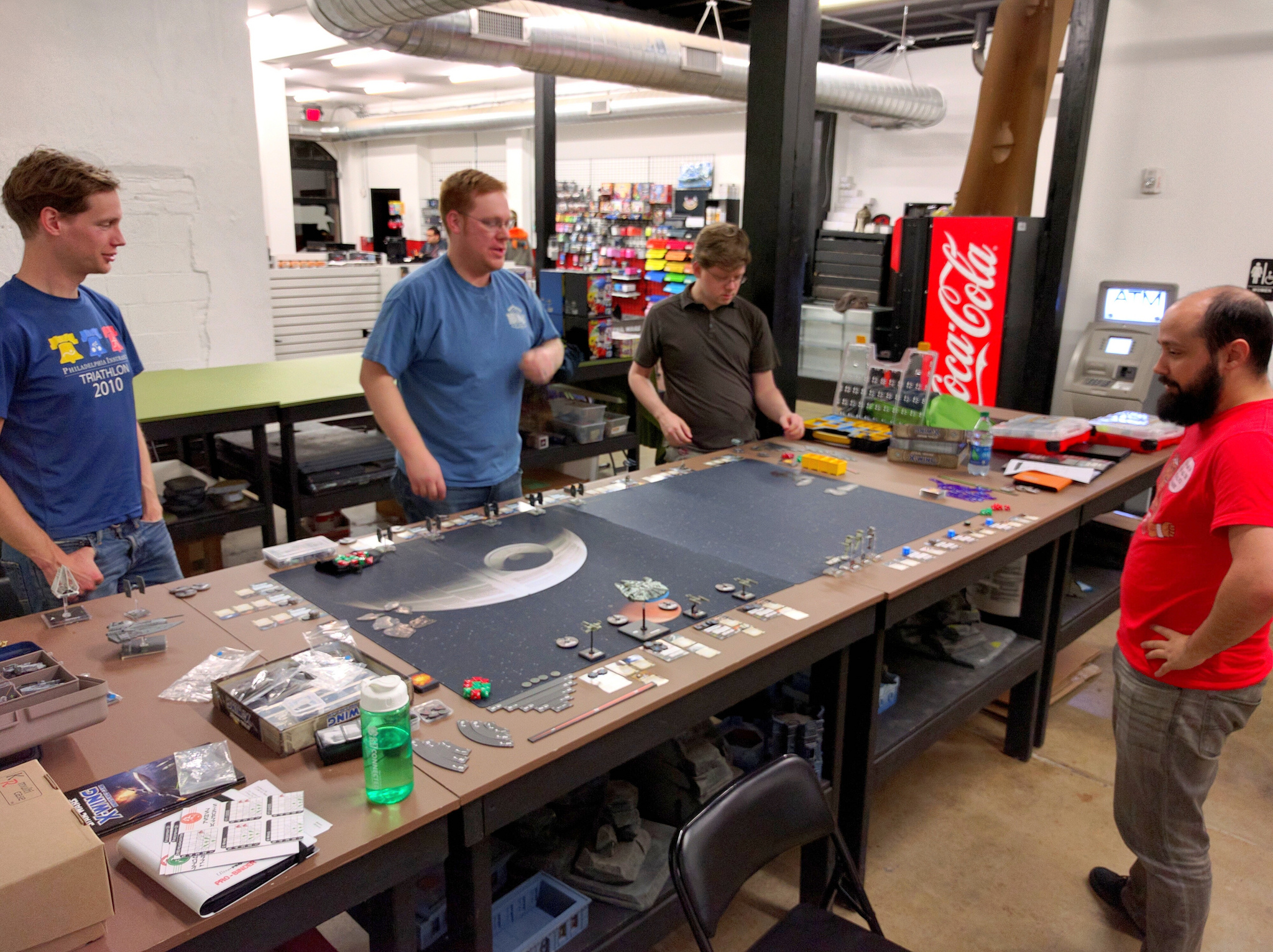
Fortunately I did have my whole collection with me! Most of the PAGE contingent was hanging around afterward and wound up playing a 300 point, 5 player battle. It was definitely too late to start that sort of thing, but was a good battle. I’d have to say that the surprising MVP was Darth Vader, who deployed all on his own in a corner doing his Lone Wolf thing and proceeded to tie up and/or destroy several ships. Imperials and Rebels eventually played down to a draw when we called time.

In general this felt a bit like 40k Apocalypse, though at a smaller scale. A fair bit of downtime, and some loss in tactical precision just given the number of things going on across the board. But still a lot of tactics and strategy in a sprawling, fun game. A great way to cap off my month of X-Wing. More to come in the future!

Everything finally laid out.

Everything finally laid out.

My expanded fleet.

My expanded fleet.

Hope you Rebels brought your stress tokens!

Hope you Rebels brought your stress tokens!

Swirling melee at table center.

Swirling melee at table center.

40k: Alternate Maelstrom

One of the big changes to Warhammer 40,000 with 7th edition was of course the new class of official missions: Maelstrom. Upon first hearing rumors of it I was really excited, enough to pre-order the associated cards. They’ve been underutilized though because I found the final release so lackluster compared to its potential. In the tournaments and events I’ve run this year we’ve used an alternate set of Maelstrom-style tactical objectives and mission rules. They seem to work really well, addressing some of the big issues while preserving the positive aspects and adding some interesting innovations, so I thought I’d finally get around to sharing.

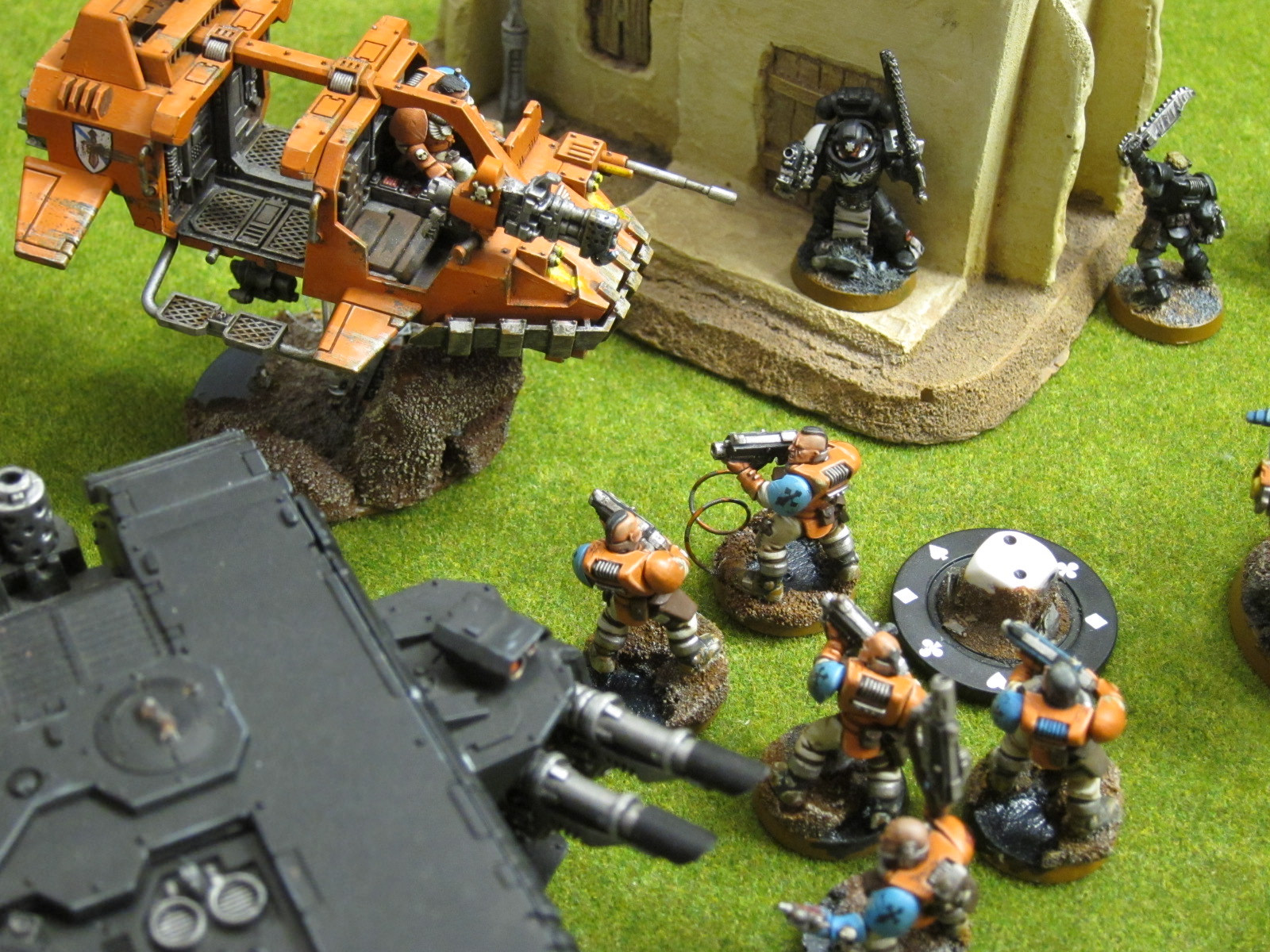
Into the maelstrom!

Into the maelstrom.

Just Roll Some Dice!

The heart of Maelstrom is randomized missions. In traditional 40k, players essentially compete for control over a set of objective markers placed on the board, or simply to kill all the opposing units. Maelstrom has players randomly determine smaller scoped objectives throughout the game. By drawing cards or rolling on a table, they’re directed to control specific objective markers, kill a stipulated type of unit, or even make particular actions in order to score points.

Official Maelstrom has many shortcomings. Some are easily rectified or mitigated. One such common house rule is to immediately discard impossible tactical objectives, e.g., if your opponent has no units of a necessary type. That this is so obvious an improvement only highlights how little effort GW put into their rules. It’s worth noting though what seems to be a frequently overlooked subtlety: Should tactical objectives be discarded only if they were never possible, or even if they’re impossible when drawn? The “Kill a psyker” goal highlights the difference: Can it be discarded immediately only if the opponent never had a psyker in their army, or can it also be discarded if all their psykers are merely already slain? I don’t have strong feelings either way and the two probably don’t offer vastly different experiences in practice, but this is a design decision to be made consciously.

Beyond a few such smaller problems, there are two design patterns throughout the stock Maelstrom that really gall me. Most obvious and frequently addressed in tournaments are random results. It’s absolutely deleterious to strategic play to have tactical objectives yield random amounts of victory points once achieved. A variety of reasonable house rules could address that and are frequently applied, e.g., always claim the maximum, or roll for the value when the objective is drawn. The latter actually imposes an interesting strategic evaluation of effort versus reward while maintaining the basic Maelstrom philosophy of unknown and variable objectives. That it’s such a small tweak but vastly better again highlights just how little design effort GW expends. In any event, a variety of hotfixes are possible for these objectives, but at some point you may as well just replace them.

Most upsetting to me though are the forced play tactical objectives, that award victory points simply for executing game mechanics. Instead of presenting a goal to work toward, they merely give away free points or, worse, dictate play. Many are actions you may be trivially doing anyway, such as Daemons and the “Cast a psychic power” condition. Others force you to make micro-level  moves that may not fit your army or macro-level situation at all—may the Greater Good shine on Tau that draw the “Make an assault” card! Scoring should be based on game conditions to be achieved, not making the player a puppet enacting pre-scripted actions.

Random results and forced play goals come from the same “Just roll dice & push models around!” mentality of Games Workshop that gave us random psychic powers and warlord traits. Otherwise stock Maelstrom could be solid with just a house rule or two and some card tweaks, but those aspects warrant substantial reworking.
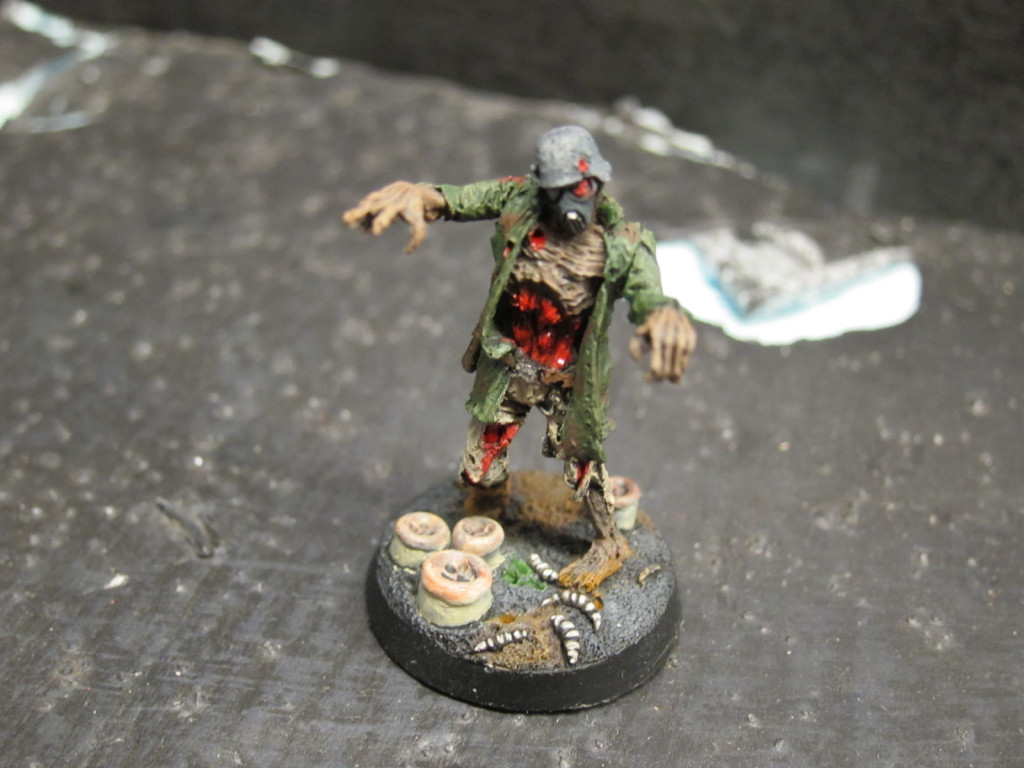
A Games Workshop game designer shambles in to work.

A Games Workshop game designer shambles in to work.

Flexibility & Deathstars

At this point it’s worth noting what is in fact appealing about Maelstrom. The surface level attraction is just the variability of it. Sooner or later most everybody wants to play something different from the Eternal War missions that have been carried through editions under one name or another for literally decades now.

As an event organizer and game designer though, what really calls to me about that variability is the flexibility it requires of the players and their armies. To really capitalize on the Maelstrom tactical objectives, you need to be able to move all about the table, and to easily switch back and forth between killing specific units versus claiming objectives. The downside of this is that it encourages armies built around—and perhaps even spamming—small, highly mobile units. Arguably the format is imbalanced toward factions with more or better units of that style. However, given that many of the recent balance problems in 40k have revolved around deathstar units or even unstoppable single models, tipping the scales the other way is not necessarily unwelcome. In my events we mitigate the chance of going too far that way by generally also including other missions for which more “grind-em-out” style armies are perhaps better suited.
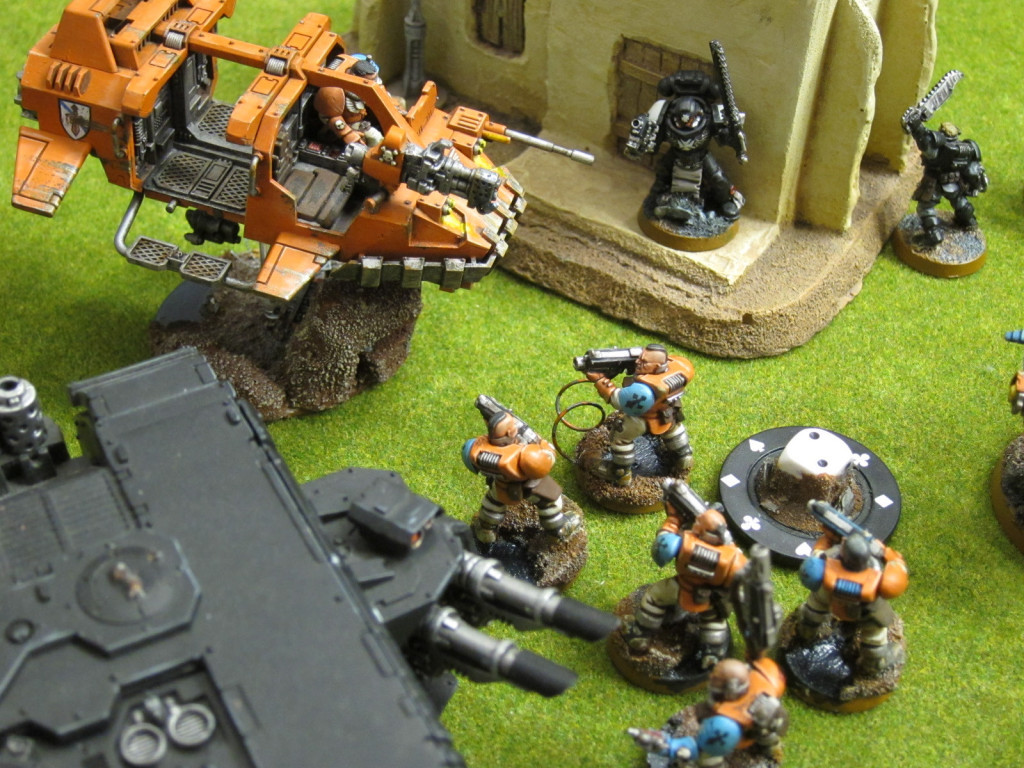
These guys are definitely here for the Maelstrom party.

These guys are definitely here for the Maelstrom party.

Logistics

In developing a revised Maelstrom mission as an event organizer rather than an individual player, I also had to keep in mind some logistics. If you don’t buy GW’s cards, stock Maelstrom missions are kind of a hassle to execute. Tracking which tactical objectives are in play, discarded, and achieved isn’t a huge deal, but it’s not nothing either. Without the cards you’re left just scribbling things down. In order to keep my events on time while enabling games to play out fully, and to alleviate the burden on our more casual, less frequent players, I really wanted to structure and streamline the bookkeeping. At the same time, this alternate format was developed for and used within small, monthly shop tournaments. In that context it’s not practical for me to print and/or make and give out whole new Maelstrom card decks as some bigger events like Adepticon have done.

A New Maelstrom

The core of my revised Maelstrom is this table of tactical objectives:
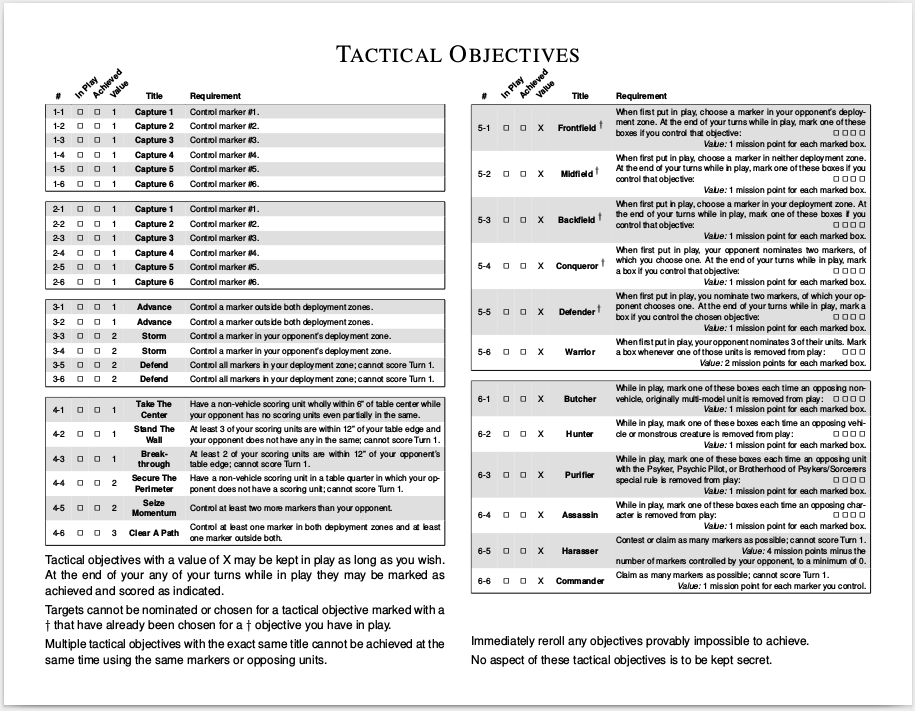
Screenshot_2015-10-21_23-37-21

[ Download as a PDF ]

Our mission packets include two copies of this for each Maelstrom mission. The players rip them out and each mark one up throughout the game for their bookkeeping. Mechanics are as follows:

  • To draw a tactical objective, roll a D66 and consult your tactical objective table. If that objective is already in play for you, has been achieved, or is scratched off, roll again. Similarly, if that objective would be provably impossible to score, e.g., your opponent has no characters remaining, roll again. Once a valid objective has been rolled, mark it as in play.
  • Targets cannot be nominated or chosen for a tactical objective marked with a † that have already been chosen for a † objective you have in play.
  • At the end of your turns, check the requirements for each tactical objective you have in play. For each fixed-value objective met, mark it as achieved and score the associated value in mission points (n.b.: not victory points). Tactical objectives with a value of X may be kept in play as long as you wish. At the end of any of your turns while in play they may be marked as achieved and scored as indicated. Once achieved, objectives are no longer considered in play and cannot be put in play or scored again.
  • Multiple objectives can be scored in a turn, caveat that you cannot achieve multiple tactical objectives with the same exact title in the same turn using the same marker(s) or unit(s). E.g., to score both Storm objectives at once, you would need to simultaneously control two separate markers in the enemy deployment zone.
  • At the end of your turn you may scratch out one of your tactical objectives in play to remove it from play.
  • Tactical objectives in play, achieved, and scratched out are not secret.

Each particular mission will then have a rule controlling the number of cards drawn, similar to the various official Maelstrom missions. Two examples we’ve used include:

  • Standing Orders. At the start of your turns, draw tactical objectives until you have a total of six in play.
  • Into the Maelstrom. At the start of your turns, draw tactical objectives until you have as many in play as the current game turn number.

Rather earning victory points directly, at game end the players are scored by comparing mission points earned via tactical objectives achieved, and awarding victory points to the higher and lower scorer according to this table:

Screenshot_2015-10-21_23-51-31

Scoring in that indirect fashion rescales the substantial number of tactical objectives that might be achieved into the 9 VP primary objective cap around which our missions are designed (they also include secondary and tertiary objectives, for a total of 20 points available in each round). In doing so the results are also normalized a bit across matches, such that one player cannot gain an insurmountable lead in the tournament by winning with a ridiculous number of tactical objectives achieved, while another victorious player falls far behind despite also trouncing their opponent but by a less ridiculous amount. In general it’s important to normalize in some fashion like this to determine the strength of a result for a Maelstrom mission, given that the actual number of tactical objectives achieved can be so variable match to match. The specific value ranges here were determined by Sascha Edelkraut and seem to work well for our 9 VP cap.

Strategy

These new tactical objectives of course eliminate random results and forced play. However, Maelstrom’s overall variability and requisite flexibility is still maintained.

Further, the X-valued objectives are a novel mechanic I haven’t seen in 40k. They enable the player to make an ongoing strategic evaluation of effort versus reward for that condition, either pushing on to try and acquire another point or to cut bait and dump it for a new, hopefully easier, objective. Objectives that require the player to nominate a target also encourage players to declare a goal and then work toward it, rather than simply hoping they draw tactical objectives for markers they’re already holding. The several variations with one player putting forward several proposals and the other choosing among them are also an interesting twist, adding a new interaction and a little bit of adversarial forward thinking.

Last but not least, these tactical objectives rightfully focus heavily on controlling objective markers. However, a number also offer opportunities to play toward pure mobility, as well as annihilation-style kill point hunting. Particularly with the X-valued mechanic enabling players to work toward them for some time or not, this gives a real, conscious strategic choice about whether or how much to focus on the various types of goals, while still staying within the overall chaotic Maelstrom framework of variable objectives and necessary flexibility. You can’t win a tough match if you can’t play for both objective markers and kill points to at least some extent, but you do have some opportunity here to strategically focus your efforts on one or the other. In general that kind of choice in both play and army construction is a major goal of the mission format for our events.

Evaluation

We’ve used this format in a number of small scale tournaments (8–16 players) this year, and it’s worked very well. The logistics for me as event organizer are trivial, I simply include multiple copies of the tactical objectives sheet above in each mission packet. For players the bookkeeping is fast and intuitive to execute once explained.

To game design, random results and forced play are eliminated while still maintaining the variability and requisite flexibility of Maelstrom play. Further, a number of novel mechanics offer new and ongoing strategic evaluations to the players, as well as affording meaningful selections between different strategic concentrations and army styles.

One notable downside of this setup is that it’s not as tactile as cards. However, for a large enough event or as a one-off occassion it would be easy to convert the objectives table and mechanics into cards. A related note though is that several players have been disappointed at not being able to use faction-specific tactical objectives published by Games Workshop. This is unfortunate, but given the rampant problems among those with random results and imbalanced conditions, I don’t see any acceptable approach but to disallow their use in tournaments.

Play!

Again, the tactical objectives sheet is available as a printable PDF. For an example of how this format has been incorporated into a tournament, check out the mission packet for our June event, The Tournament of Blood. These rules and the objectives table are released into the public domain, so please copy, edit, and use as you wish. We would though love to hear about any use of these, as well as suggestions or questions, in the comments below.  Good luck in the Maelstrom!
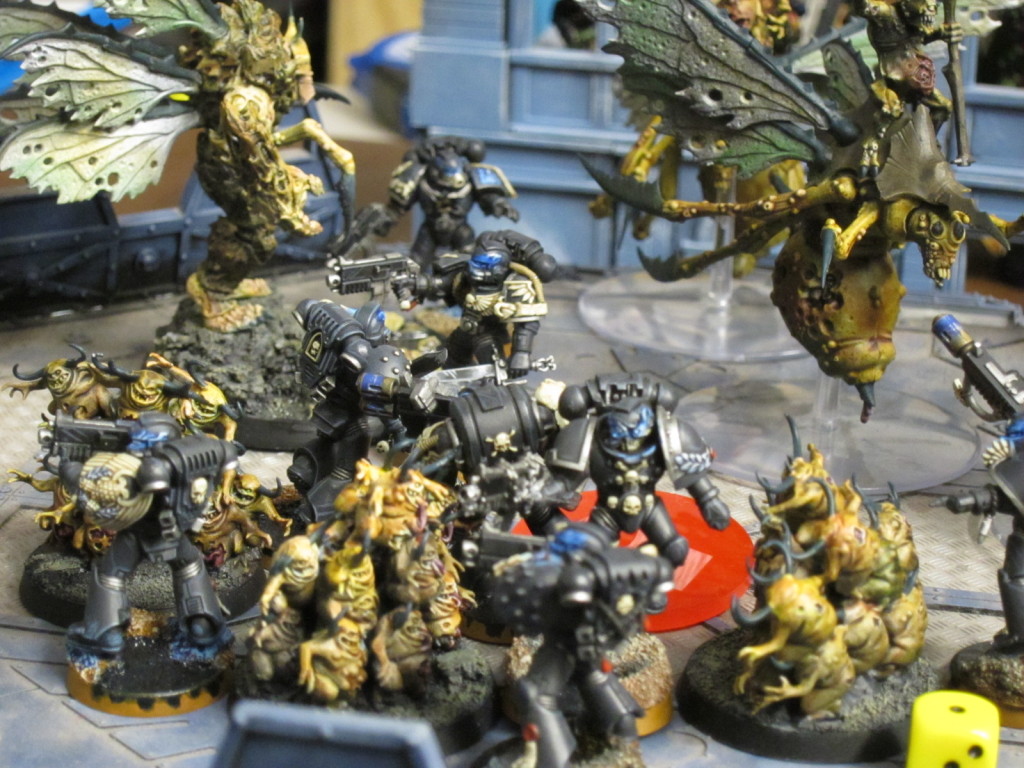
Descent into the Maelstrom!
Descent into the Maelstrom!