More Ancient History: Space Marines!

I also stumbled across this while cleaning up one of my web dumps: My most successful experiment with sculpting and casting a game piece.

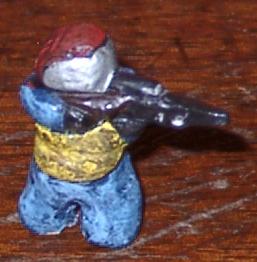
The original “little dude.”

It’s, you know, pretty terrible.  The simplicity could actually work well, but the sculpt wasn’t smoothed over and evened out enough so he’s kind of lumpy and rippled. He was actually made out of Sculpey clay rather than green stuff, for no real reason than that I had a ton of it. He stands about 3/4″ tall, the biggest problem with the Sculpey being that it shrinks a bit in baking. A small plastic army man stood in for the original armature, deeply buried in the final shape.

Still, though, he actually looks awesome.  He’s wearing a cool little backpack you can’t see that came out pretty well. Most importantly, he worked great as a game piece looked at from table height and wound up the player piece in Relic Hunter.  The small, cartoonish shape to him worked great for its atmosphere and became one of its defining symbols.

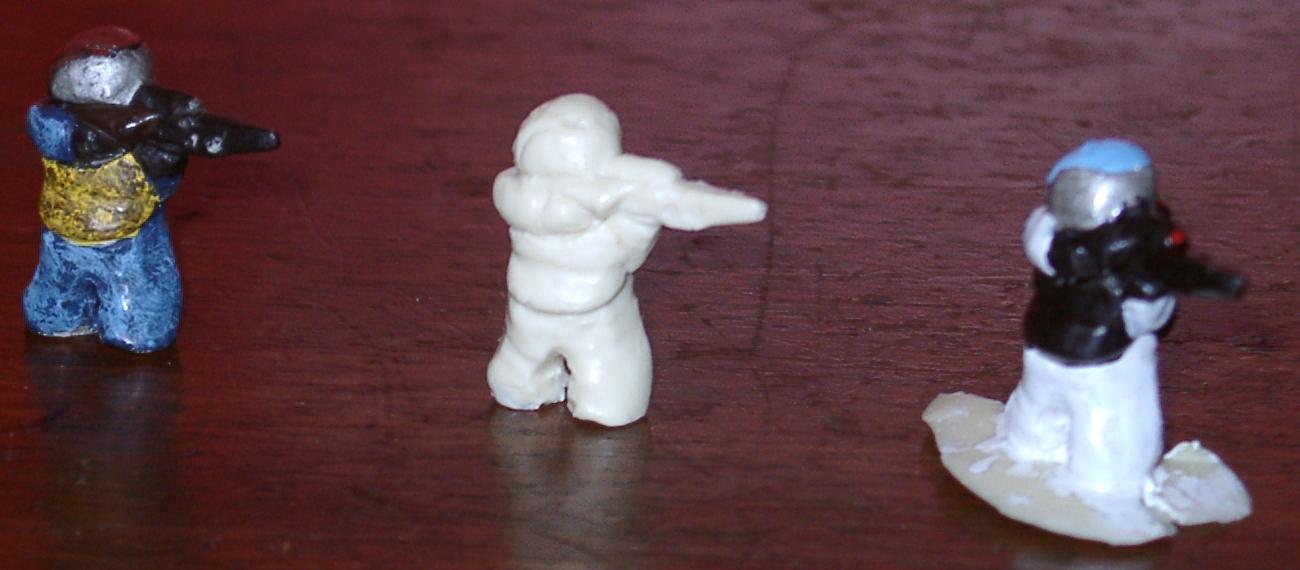
Cast pieces. The guy on the right is in a vaguely Imperial Stormtrooper inspired paint job…

To support that I wound up casting dozens and dozens in Alumilite.  Eventually a bunch of the copies were cleaned up and themselves made into a 5-piece mold so I could cast them like gangbusters. At one point we had so many of them, Daryl and I could fight over design decisions by throwing fistfuls at each other.  I cast them up in 5 different colors, one for each possible player, and they drifted around into the corners of my apartment like confetti.  Some of them got some minimal paint jobs and were inevitably fought over in playtesting.

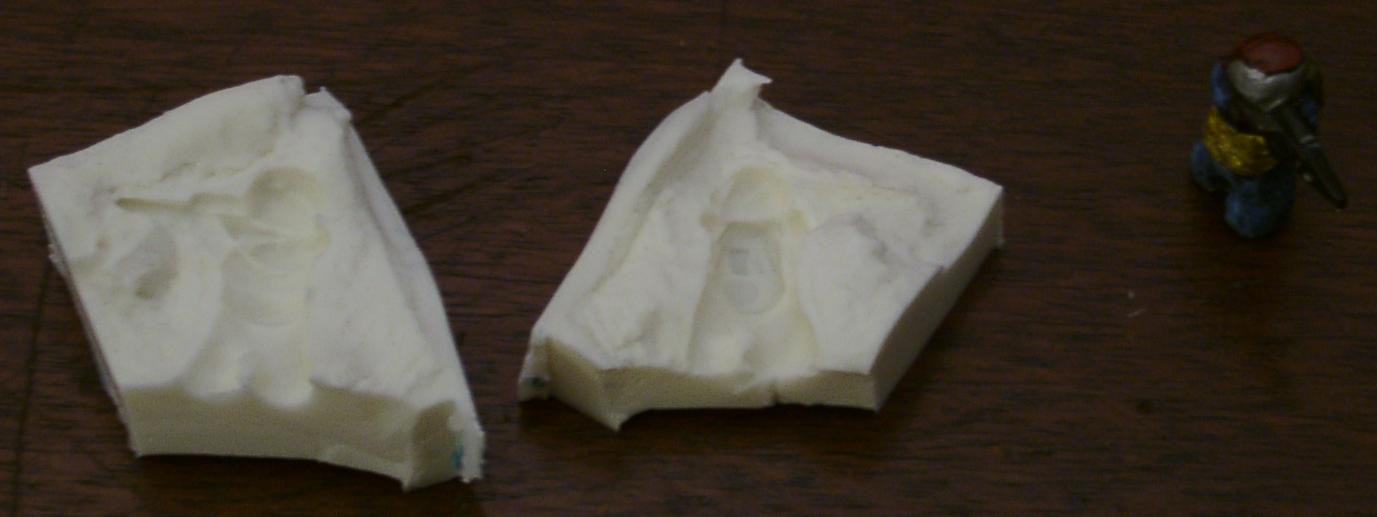
The mold from the original piece.

I forgot to put release powder on the first half of the mold before pouring the second, so it had to be cut and ripped apart and hence looks like a mess. Still worked well though for what felt like a long run of casts.

Magnetizing A Predator

Space Marines are among the best equipped and flexible armies in the Warhammer 40,000 universe. Their vehicles are therefore loaded with many options. This short tutorial presents some notes on magnetizing the weapons for a Predator tank so that different configurations can be easily used in different battles.
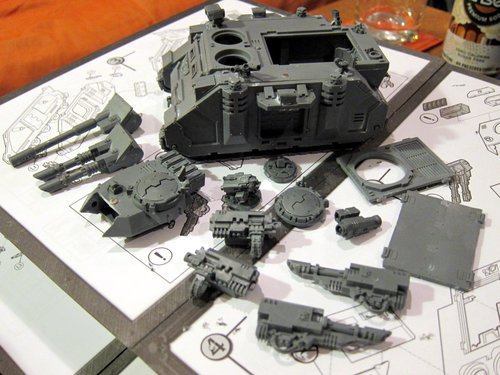
All the weapons options available for the Predator model in the box.

The process begins by assembling all the weapons and the main hull. The turret can be glued together, but don’t insert a weapon, as in the picture above.

An important point is to leave the various hatches unglued, and to assemble appropriately to meet all loadouts. By leaving the main turret mount unglued, the standard Rhino top doors may be put on to use the vehicle as a Rhino. Similarly, it’s rare for a Predator to equip an additional Storm Bolter, but this is standard kit for a Rhino. By assembling a blank and a Storm Bolter hatch but leaving them unglued, these can be readily swapped.

Note that the hatch holes might have to be scraped and sanded to enlarge them in order to easily plug the hatches in and out after painting. For this model the hatches have been assembled closed and the Storm Bolter on the basic swivel mount as other models in the army use the variants with exposed Marines.

Side sponson panels could also be magnetized for swapping with standard Rhino doors. However, this may not be worth the effort and is not done here as simply not mounting sponson weapons and putting on the standard top hatch and Storm Bolter will render the model clearly usable as a Rhino. Dozer blades are also a good candidate for magnetization, but are also not done here.

Hunter-Killer

Although probably the last part that should be done, the hunter-killer missile is a good example of a component worth magnetizing. It’s not typically equipped every game, and removing it during battle after firing is a great WYSIWYG reminder that it’s no longer available.

The first step is to determine an adequate space for the missile to be mounted on, and then use a pin vise to drill a pilot hole at that location.
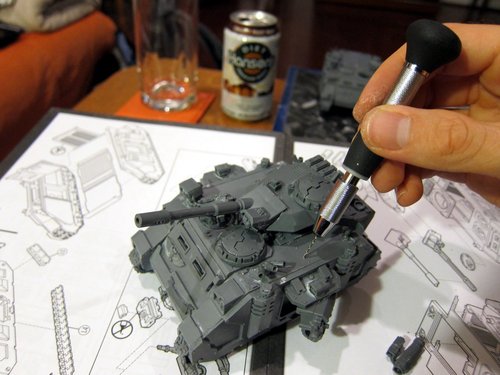
Pin-drilling a pilot hole for the larger bit.
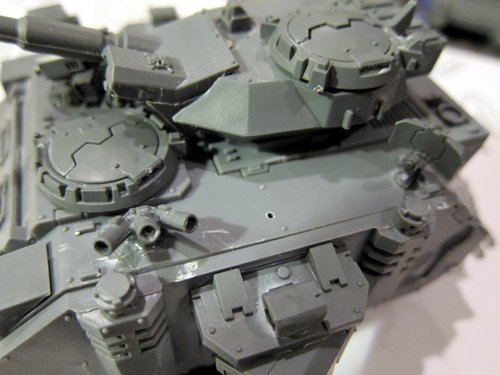
The pilot hole to guide the larger bit.

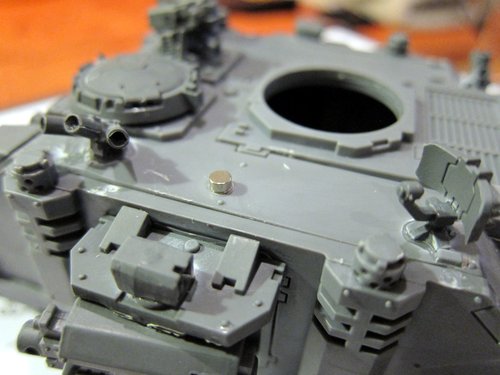
Standard 1/8″ rare earth magnets are used here, so a 1/8″ hole is made in the hull, into which one will fit snugly. A standard drill bit manipulated by hand will create such a hole quickly, cleanly, and easily. The pilot hole gives the larger bit a place to start and prevents it from shifting, creating an overly large hole or damaging the surrounding area. It’s fine to drill all the way through the thin top section of the hull. The magnet will fit snugly enough to not fall through, and this will enable it to be mounted flush with the top.
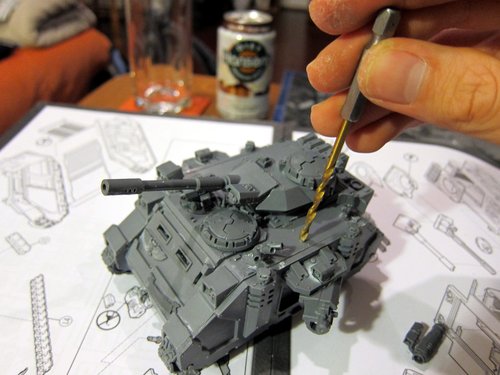
Drilling a larger hole for the magnet to sit into.
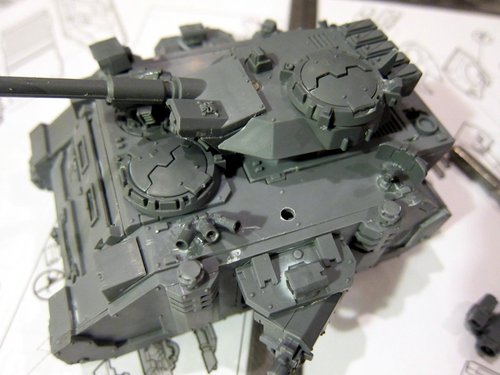
A 1/8″ hole in which the magnet will sit snugly.

Super-glue should then be dabbed into the hole and the magnet inserted. An easy way to do this is to put the magnet on a flat metal tool such as a hobby knife blade or the backside of a scraper. Insert the magnet into the hole, press it down flush with the top, and then slide the tool off horizontally. The magnet will stay in place as the tool slides. This is much easier to do than inserting it with fingers or tweezers.
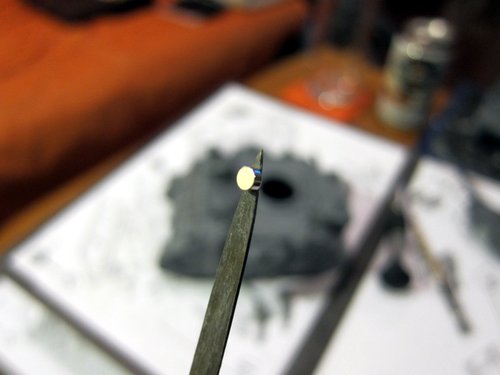
Manipulating the magnet using a flat metal piece.
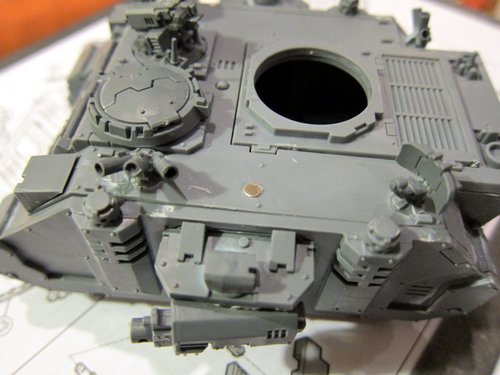
The magnet set in the Predator hull.

This process is then repeated for the hunter-killer missile, carefully drilling a pilot hole, then enlarging it, dabbing super-glue inside, and inserting a magnet. This hole should not be as deep as a magnet is tall, so that it sticks out slightly and provides a bit of a standoff.
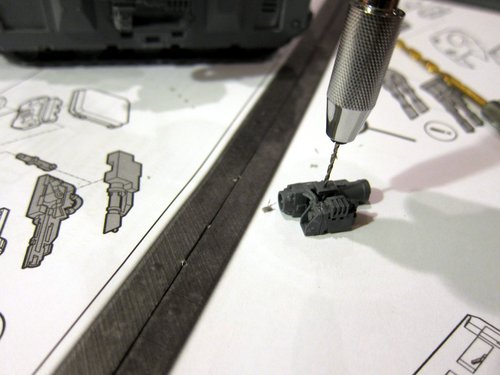
Pin-drilling a pilot hole in the hunter-killer missile.
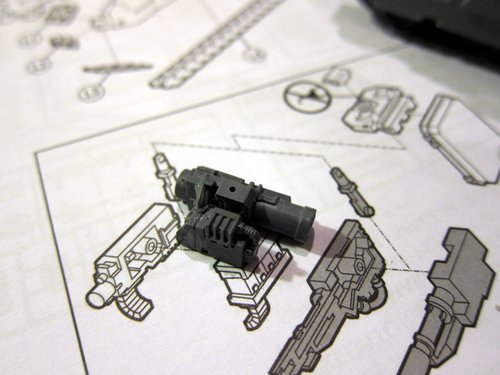
The pilot hole in the hunter-killer missile.
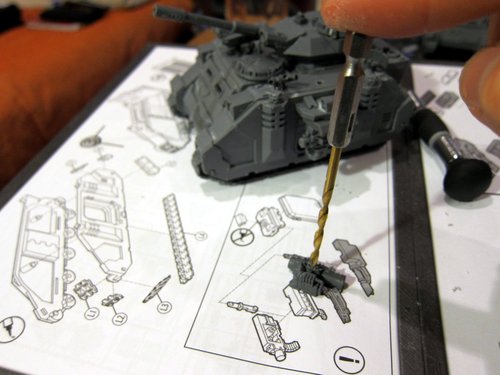
Drilling out the magnet hole in the hunter-killer missile.
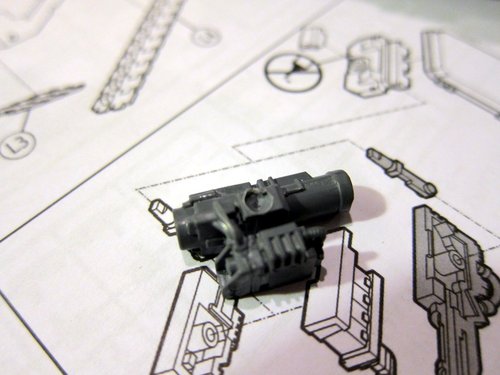
The magnet hole in the hunter-killer missile.

Once set in place, the magnets can be very hard to extract. It is therefore critical to get the polarity correct the first time. A useful step is to put the second magnet on the target, ensuring it is aligned correctly, then sliding it off onto the tool to be manipulated so that the face to be inserted remains showing.
Checking the polarity orientation of the magnet to put in the hunter-killer.
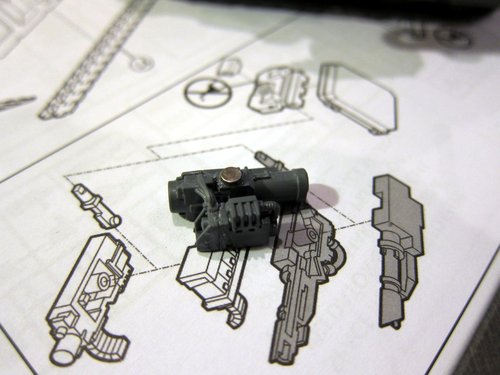
The magnet set in the hunter-killer.

Another critical point is that it is well worth ensuring that all of the similar magnetized pieces in an army are oriented to the same polarity. For example, every hunter-killer missile should have their magnet set with the same magnetic facing, so that any one of them may be used on any tank. It is a true inconvenience to have magnetized parts but still have to match particular components up to particular models.

Finally, if super-glue does not adequately hold a magnet in place, deepen the hole slightly, insert a blob of greenstuff or greystuff, and re-insert the magnet. Once hardened, the clay will hold the magnet securely.

Sponsons

Using the same basic techniques, the sponsons are easily magnetized. The key aspect of this is to ensure at least the same side weapons use the same polarity orientation! The slots on top of the weapons could be filled with greenstuff or similar, but are completely obscured on the tabletop by the support arms so it’s unnecessary.
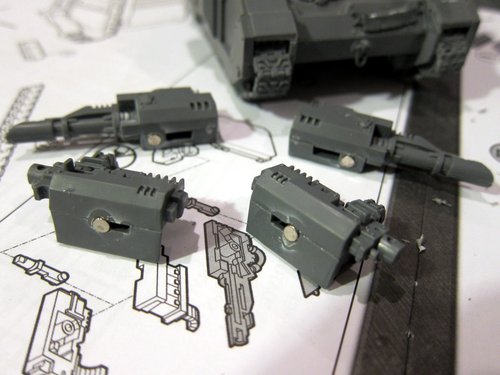
Magnets set in the sponson weapons.

Setting magnets in the sponson arms is a simple matter of slightly enlarging the existing holes, applying glue, inserting the magnet, and gluing the sensor piece on top.

These could be made more elaborate by building up a standoff or attaching the magnet to the original weapon strut. However, this is extra work that is not noticeable on the tabletop. Attaching the magnet to the strut is also significantly more flimsy, with the magnet liable to being popped off the arm in transit.
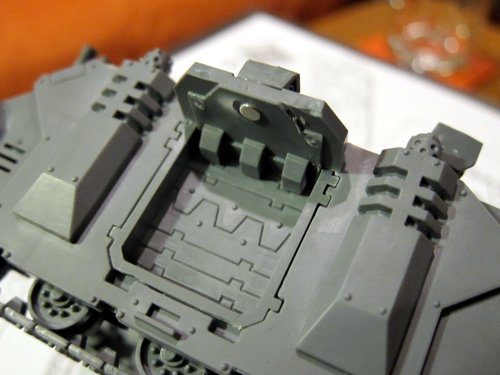
Magnet set in the sponson arms.

Turret

The final component to magnetize is then the main turret. There are several approaches to doing this, but all involve sheering off the pivot arms of the weapons so that the sides are flush.

One approach is then to mount a magnet in the side of the turret opening where the pivot arms would otherwise go, and then mount magnets in the sides of each weapon. However, this approach is slightly tricky to pull off such that the weapon does not tilt slightly when set. It is also prone to the weapon drooping.

Much easier and more reliably better looking is to mount a magnet in the top leading edge of the turret and in the top of the weapon backend, just behind the angle plate. These would be tricky to line up exactly, but it’s not necessary. The magnets are strong enough to hold the weapon in place even when not perfectly touching. As long as the magnets are roughly flush and centered, the weapon will align correctly and not droop when placed.

Again, make sure to double check the polarity orientation of the magnets before inserting into the weapons, and to use the same arrangement as on other tanks in the army if applicable.
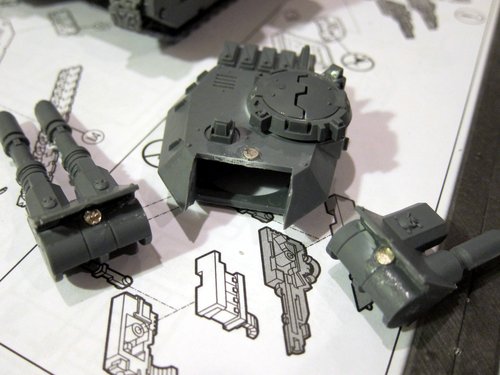
Magnets set in the main turret weapons.

Finished

And that’s it, the Predator is now ready to roll with whatever weapons the day’s opponent entails!
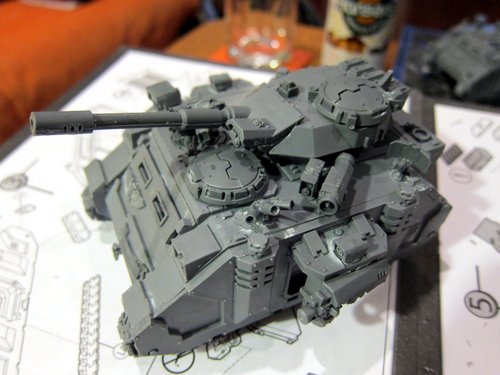
The finished Predator, loaded out as DakkaPred.
Dark Eldar Quick First Review

This week I’ve been reading over the new Dark Eldar codex. These are some of my first impressions. As a side note, I was not super familiar with previous editions of the codex, so much of it was new to me.

Cover

GW definitely goes up and down on the quality of its codex covers. Marines have generally been ok, if a little staid. Blood Angels were terrible—boring scene, poor technical execution (proportions, body angles, etc.). Skaven were solid, as is the Dark Eldar cover. It well conveys the feeling of a horde of killers oozing out of a sudden, inky darkness exploding over their target.

Models

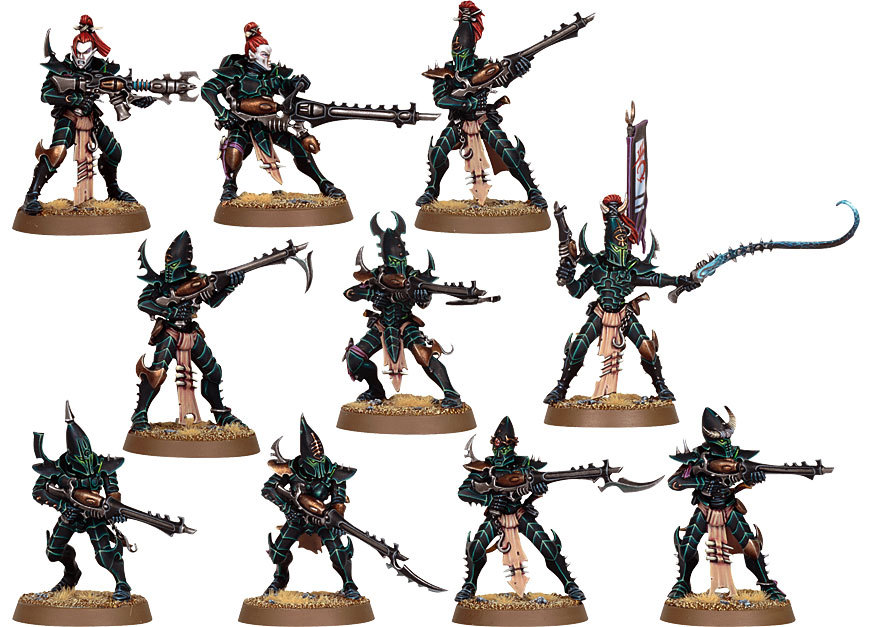
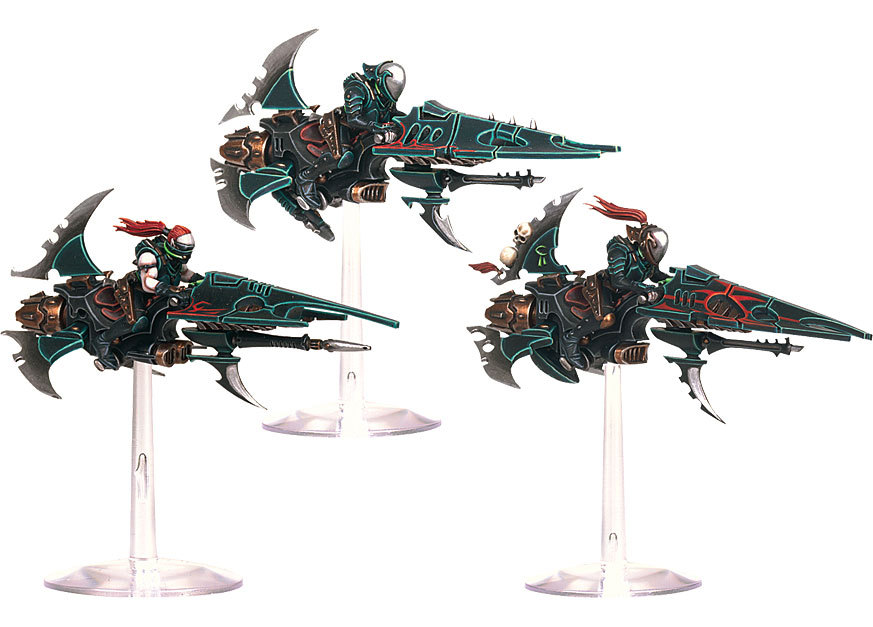
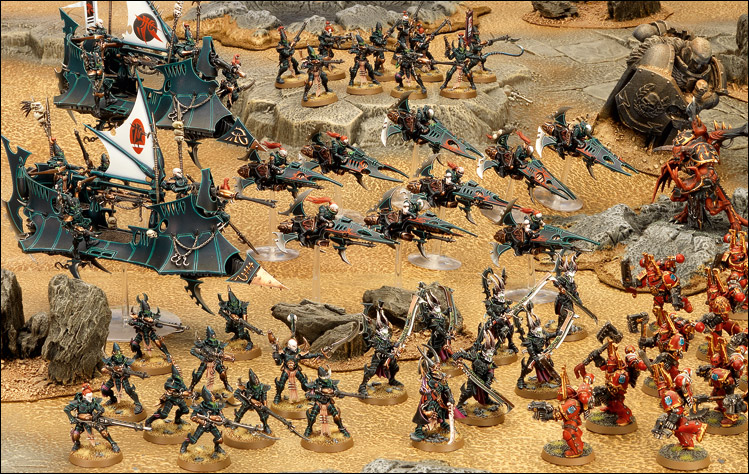
mandrakeBy and large the new model range is excellent, and a vast improvement over the previous models. The Mandrakes in particular stand out. Previously a pretty stupid looking collection of generic Dark Eldar looking figures in gratuitous gimp suits, now they’re exciting and original. The models fit in really well with the fluff of shadow beings able to appear at will out of the darkness, and I really like them a lot. I’m also a big fan of the new Reavers, which have a much more exciting style, rider pose, and dynamism than previous jetbikes and bikes.

Other new models for the army are all also pretty good. They look much more serious and original than the previous line. Of note, they have a lot of edges, like the plating on their armor, and other details that I think many people will be able to paint up very nicely without much difficulty. The artwork for the units without models also looks good, so I’m looking forward to those being released. Artwork for Scourges, Wracks, and Grotesques in particular all look great, so I’m excited to see how those models come out.

I got a chance to check some models out in person at Redcap’s the other day, and a couple more things stood out that you can’t tell from the book or website. One is their scale; the models are small, very thin and lithe. The height still doesn’t match up correct for Space Marines to actually be eight foot tall warriors, but the body proportions look a lot more in scale. The Dark Eldar are notably thinner than Imperial Guardsmen. When you look at these guys it definitely makes sense that they’re all Toughness 3.

The other thing the GW pictures don’t convey is the number of options available. There are a good number of leg stances and enough poseability that even the large units have enough variety. Most notably though, the boxes seem to have a ton of heads in them. From the website it looks like all the Wyches have long hair, all the Kabalites the tall helmets, and so on. I haven’t seen sprues, but from the assembled models Adam at Redcap’s had, it looks like you actually have a bunch of options in each box. Enough to make most of a unit with hair or the blank face masks—which I love—or the revised, much improved helmets in the Kabalite case. Pretty cool, and a potential way to help differentiate units.kabalite

Fluff & Book

The codex book is well done. There’s a good amount of fluff. Coming at it unfamiliar to the faction, I was happy with the quality and quantity of background material. It’s slightly difficult to imagine how such a race continues to function, but that’s true of most of the 40k factions and well within tolerable bounds for suspension of disbelief. Small touches along those lines though were well appreciated, e.g., discussion about there being small amounts of Dark Eldar procreation but most being bioengineered. There are also some good incidents highlighted, e.g., a crazy Salamanders assault into the heart of Commorragh itself to retrieve a captured ship. Although it’s somewhat sad that this is worth noting, the editing in the book seems to be on par with the recent books and much better than the previous editions. I only caught a couple cases of extraneous or missing words in the fluff. Similar to the Blood Angels book, a lot of of the black and white artwork is dark and lacking in contrast, but it’s workable. I guess that fits the mood, but a lot of the detail and quality would carry through better if it was lightened a touch & the contrast raised.

Rules

reaversObviously I’ll have to see the new units at work to really get a feel for them. However, my purely text-based take on them is definitely favorable. In particular, they have a lot of special rules and powers that bring a different feel and style to the army, without any of the angry and confused “WTF?!?!” that the Blood Angels book engenders. For example, Pain Tokens and the ability of many units to gain buffs such as Feel No Pain as they kill units is a new, interesting mechanic, fits in well with the fluff, and brings something novel to the faction without seeming terribly over the top. Nearly every unit has a special rule or ability, so it could be a confusing army to play against the first couple times, but for now I’m excited to see how they work out.

It’s not obvious from the text that there are any particularly terrible units in the book. Almost all seem to present interesting options. Reading through at first it’s almost discouraging because many units have a ton of close combat attacks and many others have a bunch of great shooting attacks. But, it’s not clear how to interpret that given the low Strength and Toughness of the units.

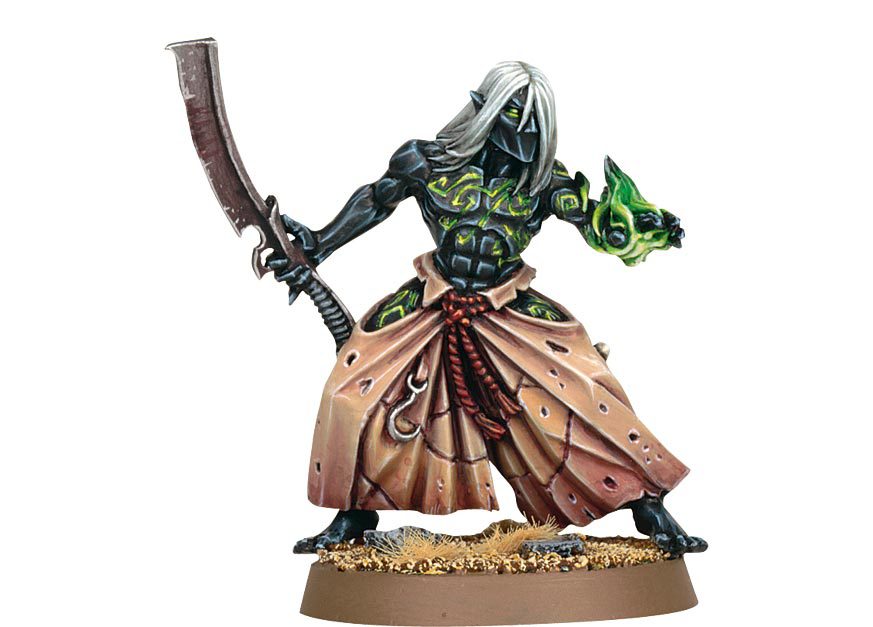
lelithConsider Lelith Hesperax, a stone cold killer. Every model against her loses one attack, to a minimum of one, because of her blades and barbed hair. She also has a 4+ Invulnerable, buffed to 3+ in close combat and her attacks ignore Armor Saves. On top of that she’sWS 9, BS 9, Initiative 9 (!) with 4 base attacks, plus a bonus for two close combat weapons, plus she gets an extra attack for each point by which her weapon skill beats the highest weapon skill in base-to-base with her. So, against a typical Tactical Squad she’s going to drop 11 attacks on the charge. But she’s strength 3. So, on average against MEQs 7.33 of those attacks will hit (11 attacks times 3+ to hit), and 2.44 of those will wound (7.33 hits times 5+ to wound), so she’s basically looking at 2 or 3 dead Marines. That’s pretty good, but it’s not over the top either. For 175 points she seems… probably reasonable? Maybe even fairly touchy to use, given that she doesn’t have shooting abilities and only a typical Invulnerable against shooting for an HQ, though she’s also likely to have Feel No Pain from a Pain Token. So, Lelith’s the fastest and the best, even more than the most powerful demons, but she’s ultimately a small humanoid. A lot of units are like that, though even less clear. A ton of attacks, powerful abilities, but all seemingly likely to be balanced out by relative weakness and fragility.

I gather there are probably better HQ choices in the book because of their other abilities, e.g., Vect’s 50% odds to Seize the Initiative, but Lelith highlights how I felt reading many of the writeups. At first I thought “Wow, that’s a ridiculous number of attacks and high stats!” Then I remembered she’s only S3 T3. I assume and hope the other crazy abilities balance out similarly. For example, it’s harder to evaluate, but the Dark Eldar definitely have some extreme mobility. Reavers can move 36 inches and get a 3+ Turboboost save! But they’re only Toughness 4 with the buff from their bike. It definitely comes across as a glass jaw army, with some serious aggressive capabilities but not much capacity to stand and take damage. Again though, things like Pain Tokens granting Feel No Pain change that, so it’ll be interesting to see how it plays out. Certainly at the moment I’m optimistic that the book is well balanced and look forward to some matches.dark-eldar

All pictures above are from Games Workshop, used without permission.