Devastator Squads

Most of the original core of my first, current 40k army was started with models given or lent to me by my friends Matt, Lovell, and Daryl. When I started expanding that list, Devastators were the first models I bought. I chose them for two simple reasons: They looked cool, and I figured I could use some heavy weapons. Emphasis was on the former. In their first couple games, plasma cannoneer Jericho and his squad picked up some splashy kills and were fast tracked onto my painting schedule. They came out pretty well, cementing their position in my roster.

heavy_bolter1Like several of my units, such as my Captain Angholan, I continue to play my Devastators in every normal sized game simply because they look awesome and have built up a great narrative across my games, factors that overwhelm some possible tactical shortcomings. I always roll my Devastators as two Plasma Cannons and two Heavy Bolters, with at least two or three additional marines as ablative wounds. That’s an expensive setup at some 218+ points, and unpopular in Internet theory hammer, but fortunately I generally find my Devastators to be an effective unit. The following are some thoughts on them.

Size. Ablative wounds are critical. A basic five man squad is marginally cheaper, but starts losing significant functionality with just one wound. Even losing the Sergeant and his BS 5 targeting ability is a notable loss. With seven men in the squad and parked in cover, it will take a lot of sustained fire to severely cripple the unit, the Plasma Cannons usually making it to the endgame. Large portions of an eight man group safely tucked into cover will usually make it through an entire game. Two or three Tactical Marines to provide a wound buffer for the Devastators are well worth the cost to protect the initial outlay on the unit and their weapons.

Weapons. Two Plasma Cannons are the core of my unit in part because they look cool, and because I face a lot of power armor in my local gaming circle, particularly pesky Chaos Marines and Necrons. Heavy Bolters provide a somewhat more reliable source of hits and strike a reasonable balance between number of shots, reliability, effectiveness, and cost.

I feel Multi-Meltas have too limited range to be really useful in the backfield deployment zones my Devastators usually inhabit. This is even more true for Heavy Flamers.

Lascannons would be more useful against mechanized armies, but I felt they didn’t put out enough wounds for the horde armies that are also common in my group. I’m also not super compelled by the look of the Lascannons, but that’s just me.

Missile Launchers are very tempting, and strike a great balance between fighting mechanized, power armor, and horde armies. The longer range on the Launchers would also be useful. One downside is that they’re less psychologically effective against power armor. People fear plasma, and fear is always a useful thing. There are also enough Missile Launchers floating around in my Tac Squads that I feel there are enough of them floating around in my army. That said, a group of Missile Launchers would be a cheaper and probably nearly as effective stand-in for the Plasma Cannons. One note on that is that against anything but very light troops, they should probably stick to Krak Missiles. Granted they’ll put out fewer hits, but they’re more likely to wound against power armor, and most such units aren’t large enough to ignore a kill or two here or there.

Deployment. My Devastators always deploy in cover when they can, and move as little as possible. Hidden in good 3+ ruins, or even just nominal 4+ cover, they will be fairly difficult to unlodge through shooting. If there is a Techmarine in the army—I sometimes include a Thunderfire Cannon—and the Devastators can be placed in ruins, then they’re a great candidate to have their cover Bolstered by the Techmarine.

Giving the Devastators good sightlines from the start and moving them as little as possible is important. Given the number of points spent on the unit, they should ideally be shooting on every possible turn, requiring that they be stationary. One difficulty with this is Dawn of War deployment, in which the Devastators must run or drive onto the board, losing at least one turn of shooting. Notably, many tournaments cycle rounds through each deployment type, guaranteeing that this must be considered in employing Devastators.

For this reason it could be worth giving the Devastators a transport, but I don’t generally do this. With a few ablative wounds, the unit would require a Rhino, which would largely go unused the remainder of the game in my army except as movable terrain. A Razorback and its Twin-Linked Heavy Bolter would be a good support for the unit, but just can’t fit it. Given that the Devastators can move and then run nearly as far as a transport could get them in one turn, and almost certainly as far onto the board as I would want them to go, I usually don’t bother with a transport.

What I do find to be important, however, is to have them move and run onto the board in such a position that they can shoot in the consequent turn. Many times in Dawn of War games I have run my Devastators into similar covering terrain as I would normally opt to deploy them in. If they can move and then run through the terrain into a position in which they can shoot well, then this works out well. If they come up low in Difficult Terrain or Run rolls, however, they can get stranded and require a second turn of movement to get into place. Many terrain pieces are simply too large or too obstructed for the Devastators to get into position quickly enough to be effective for the remainder of the game.

Losing two turns of shooting is a significant hit on the efficiency and effectiveness of the expensive Devastators unit, and needs to be avoided, even at cost. Although the unit may take significantly more wounds, in this deployment setup, it may be worthwhile to deploy the Devastators into a relatively exposed open area such that they may get into place and begin shooting the next turn, rather than risk two turns of movement.

Close Combat. Always deployed as part of my rear Heavy Support and Defensive block, it is not uncommon for my Devastators to become entangled in close combat when outflanking or deep striking units breach the line. This is unfortunate as it wastes the shooting capabilities of the unit for which so many points were spent. The good news, however, is that the Devastators, like all Marines, can hold their own against many such units, even somewhat strong close combat specialists. They will die, but they’ll last several turns and take a number of the enemy with them. Although very costly when it happens, I have come to rely on my Devastators to be a last stop bulwark against total infiltration of my rear area.

800px-canon_plasma1Conclusions. I admit freely that any questions of the Devastators’ efficiency as a unit is surmounted for me by the aesthetic and narrative appeal of the models and squad. However, I don’t think they’re as sub-optimal as Internet wisdom holds. It is true that a pair of (Dakka) Predators is significantly cheaper, more mobile, and has as much firepower as a group of Devastators. For that reason, my core Heavy Support block for mid to large sized game is comprised of two Dakka Predators (Autocannon, Heavy Bolters) and a squad of Devastators.

However, I think the Devastators have several features that make them a worthwhile unit in their own right:

  • The Sergeant’s BS 5 targeting ability is very useful.
  • Plasma Cannons are useful against a number of armies, including Chaos Marines and other power armored or equivalent opponents. Devastators are the Marines’ only option to get plasma out on the table.
  • Missile Launcher, Heavy Bolter, Lascannon, and Plasma Cannon ranges are all high enough to cover significant portions of the board. This provides for flexibility, area control, and getting multiple shots off on advancing enemies before the squad is swept up in close combat.
  • Devastator squads are fairly survivable, and degrade nicely. While tough, vehicles are susceptible to lucky shots and unfortunately placed enemy Melta weapons, Lascannons, or similar. Especially with many armies well equipped to hunt vehicles, they’re prone to being scragged in one stroke of bad luck. Devastators, especially if some distance to the enemy can be maintained, will only slowly lose models as the unit takes hits. Meanwhile, the core can keep shooting, firepower slowly degrading as the squad racks up casualties.
  • Unlike vehicles, Devastators can tie up a unit in close combat. This is a waste of their prime abilities, but is useful as a last ditch defensive measure. Even against reasonably strong close combat units such as Genestealers, the basic Marine statline enables the Devastators to survive for a few rounds of combat. This can provide just enough time for reinforcements to arrive and swing the combat, or simply for the clock to run out and the game to end. Vehicles, in contrast, can simply be run around or easily dispatched and aren’t as able to impede an enemy rush on a home objective.

In addition to the general preceding notes on Devastators’ advantages versus vehicles, some quick thoughts on alternatives in the standard Space Marine lists include:

  • Vindicators have great firepower but limited range, and are difficult to keep ahead of an assault and quick to be destroyed once stuck in.
  • Thunderfire Cannons can put out a lot of hits but are fairly brittle, and have limited effectiveness against power armor. Its munitions simply don’t have low enough AP to fight marine equivalents.
  • It’s tempting and useful to use Tactical Combat Squads with Heavy Weapons instead of a dedicated Devastator squad. All of the weapons are significantly cheaper this way. Downsides include the fact that a full Tactical Squad generally moves too much to warrant paying for a Heavy Weapon, five man Combat Squads are easy to wipe out or break, and there’s just something to be said for a fistful of Heavy Weapons firing all at once, one at BS 5. That said, putting a Combat Squad with a Heavy Weapon into deep cover or a Razorback and camping out is a great way to hold a home objective and complement a defensive Heavy Support block at the same time.

All told, I think Devastators are a solid list selection. They’re an expensive unit, but in my playing consistently bring home their cost in enemy points and serve an important role in my defensive block.
Titanicus

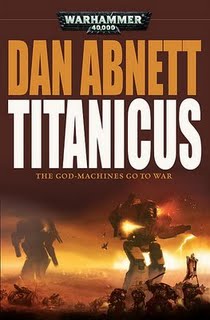
titanicusTitanicus is a 40k novel by Dan Abnett that I had been planning to read for some time, prompted by my buddy Matt (who also lent me the book).

From the opening of the novel the Imperial forge world Orestus is struggling under a full-fledged, Titan supported Chaos assault. Rationale for the Chaos assault is never made terribly clear, but presumably simple, basic control of the planet and its many manufactorums is the goal. Wrapped up in a larger crusade through the system, few Imperial reinforcements are offered to bolster the planet’s defense. However, the forge world finally manages to convince the Legio Invictus to countermand their orders and attempt to save Orestus. Invictus eventually succeeds in slowing the invasion, but the planet is thrown into turmoil when revelations are made that shake Imperial faith to its core, threatening to rive the the Mechanicus between old and new factions. Worse, the Chaos action is revealed at that moment of weakness to be much, much more than was originally understood…

The plot of Titanicus is a solid action oriented flick with just enough deeper elements thrown in to be interesting. An awful lot can be learned about the Adeptus Mechanicus by reading this novel, much more than I had previously picked up. It covers skitarii warriors, Titans, supporting battalions, and the inner sanctum of the Mechanicus in great detail. A fair bit can also be picked up about the non-military aspects of the Empire. Lives of common citizens, government, and commerce in the forge world are nicely covered alongside the battles.

As usual, Abnett handles the action very well. He has a knack for covering just enough action to be exciting, without going on too long and having it wear thin. In particular, the Titan battles are just detailed enough when interesting, but simplified and made more abstract when not. This is taken just a bit too far in the ultimate, super sized battle, which is perhaps a tad too abstract, but is otherwise greatly appreciated—Titan battles frequently aren’t actually all that interesting, consisting mostly of giant, lumbering machines pouring nearly limitless rounds of ammunition into each other. They can be better, when there’s more movement and tactics, but they’re frequently not and shouldn’t be belabored; Abnett makes those calls well. In return, the internal workings of the machines, the bindings between man and machine spirit, and relations among the crew are all generally more engrossing, and this book places an appropriate amount of emphasis on that aspect. Skitarii battles are similarly done very well, conveying the sheer chaos, mayhem, speed, size, and brutality of these supercharged, swirling brawls excellently. Glimpses of the Planetary Defense Forces and the outworld inhabitants beyond the hives are also great. The early descriptions and the closing moments in the nomad waypoint shack are very memorable and personal in a way often missing in the hard, all-action 40k universe.

Where this book falls slightly short is character development. The characters are almost all reasonably compelling, sympathetic when appropriate, and very readable, but there’s not much development throughout the novel. There could have been more, but it falls just short. Notably, there’s no development on the Chaos side—in fact, there are literally no Chaos characters at all. This is unfortunate, as Chaos Marines present a wealth of potentially deep characters. The invading forces instead merely come across as an implacable, unthinking wall, without motivation or personality.

The controversial truths are managed about as well as could be expected for a franchise novel that must accord with an extensive assemblage of background canon. Relations between the Empire and the Adeptus Mechanicus are enrichened and made more complex, but nothing’s really provably thrown away in the process. As usual, truth is flexible in the 41st millenium, and the rabbit hole goes as deep as you want, in whatever direction you want to move.

All in all, Titanicus is a solid, good 40k novel, though it shouldn’t be read as a first 40k novel as it requires a fair amount of background to really get the most out of it. The novel could be a little deeper and stronger, but it is a great source of Mechanicus and general Imperial knowledge, as well as being an entertaining trip well worth the time.

Battle Report: PAGE CC Sunday 2009/11/22

Tonight’s PAGE Center City Sunday Night Fights were well attended, with ten 40k players on five tables. Charles and I squared off in the continuing attempt to brainwash him into the hobby. Lovell provided him with an ample army of Tyranids, hell bent on punishing the trespass of a small force of Kingbreakers deployed to defend the excavation of a rediscovered cultist temple, once dedicated to the hive mind and fed with many an unwitting settler…

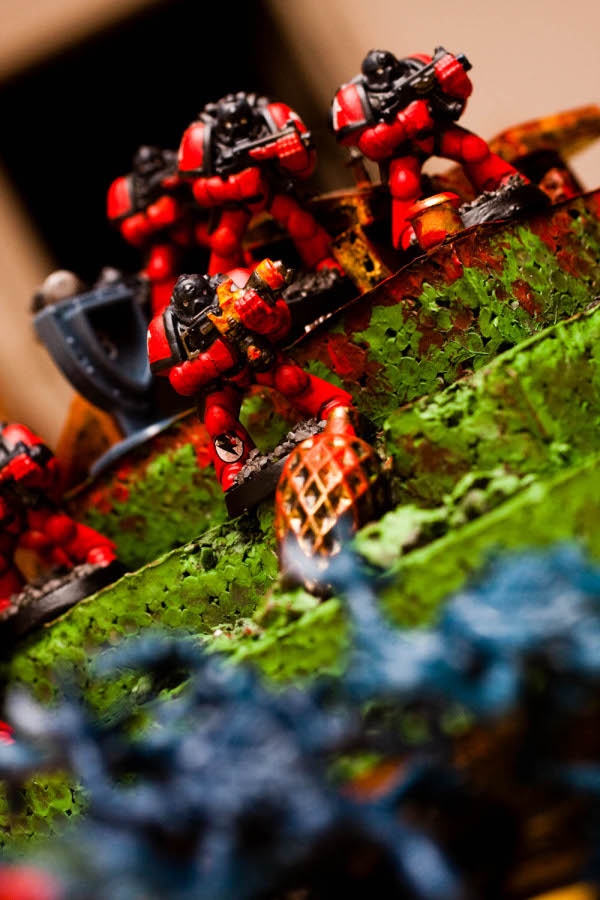
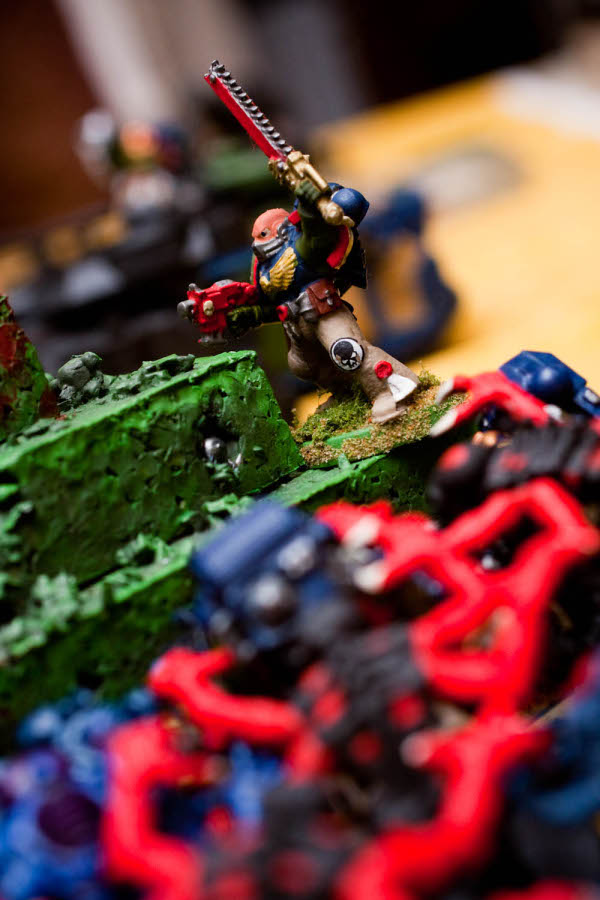
Kingbreakers Devastators are overwhelmed by the swarm!

Kingbreakers Devastators are overwhelmed by the swarm!

Awesome photos of Marines about to meet their demise are from Charles!

Rules

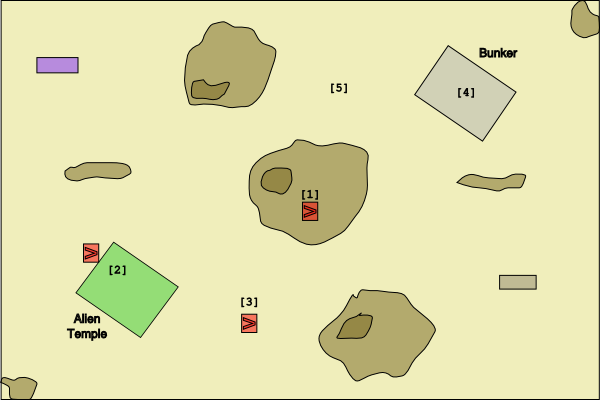
Pretty standard setup:

  • 1750 points
  • Capture and Control (5 objectives)
  • Dawn of War
  • All terrain and levels just difficult, bunker simply as difficult to stick to the basics.

Armies

Lovell is very much into Genestealer armies and he particularly wanted to keep this army simple for Charles, so it was very straightforward: Broodlord with Genestealer Retinue, 5 Genestealer squads, and Lictor squad. Each had a bunch of upgrades, including better carapaces, feeder tendrils, and so on.

kingbreakers-iconThe Kingbreakers brought their current fairly typical lineup for 1750–2000 points: Captain Angholan (Relic Blade, Digital Weapons, Hellfire Boltgun) & Sternguard (3x Multi-Melta) in Drop Pod (Deathwind Missile Launcher, Locator Beacon), Tac Squad (Power Fist, Plasmagun, Missile Launcher) in Pod, Tac Squad (Flamer, Missile Launcher) in Rhino, Tac Squad (Flamer, Missile Launcher) in Razorback, double Predators (Heavy Bolters, Autocannons), Devastators (2x Plasma Cannons, 2x Heavy Bolter, 3 squad mates), and double Landspeeder squad (2xMulti-Melta, Heavy Bolter, Heavy Flamer). Continuing with the latest experiment, the Kingbreakers also fielded a Thunderfire cannon from their Mechanicus contingent.

Battle

Apologies if any of this is a little inconsistent; it’s all from memory.

Deployment

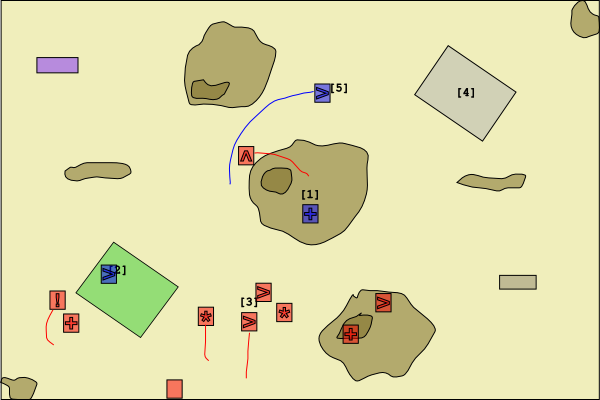
I rolled to choose table halves first, and again to go first. Given the Dawn of War rules, I simply dropped down my Razorback and Rhino Tac squads, camping on my home objectives. A small Combat Squad also deployed well forward, on the centerline, to push deploying Tyranid back as far as possible from those objectives (units must deploy 18″ from all enemy units in Dawn of War). Charles and I talked briefly about his deployment, debating whether it would be worth it to gain some extra ground and hope the Nightfighting rules applied in Turn 1 of a Dawn of War game would cover his forces through my first round of shooting, or to hold them off the table entirely. In the end he went with the latter, which I thought was a good, interesting tactic not currently seen at PAGE CC much but that I would expect elsewhere.

20091122-00

Turn 1

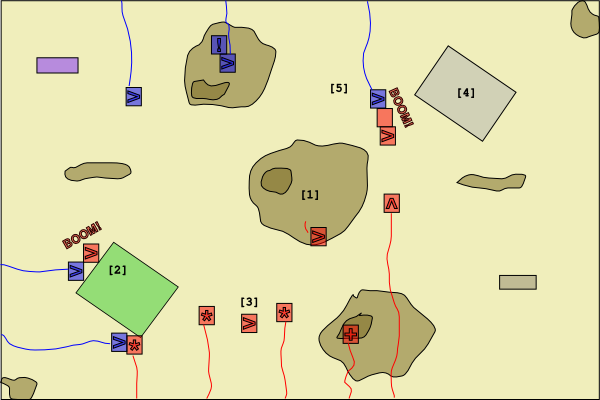
Kingbreakers’ Drop Pod 1 with Scolirus’ Tac troops took a big risk and came down on one of the Tyranid home objectives, hoping the bugs would be just out of range for a first turn assault and that enough combined firepower could be brought to bear to hold the position. Notably, they deployed behind the Drop Pod, adding several inches and a further obstacle toward assaulting the troops. Unfortunately the Pod scattered just out of range to contest the objective, but Scolirus was well placed to sweep onto it in the coming turns. Landspeeders moved to support Tac 1 while the defensive block of Devastators, Predators, and Thunderfire came onto the board.

Genestealers rushed on and had a very successful first turn, capitalizing on Drop Pod 1’s risky forward Deep Strike to take it out along with its Locator Beacon and Deathwind Missile Launcher. The swarm also punished poor deployment among the Kingbreakers’ rearguard, Outflanking, assaulting, and severely damaging the Devastators and Tac 2.

20091122-10

Turn 2

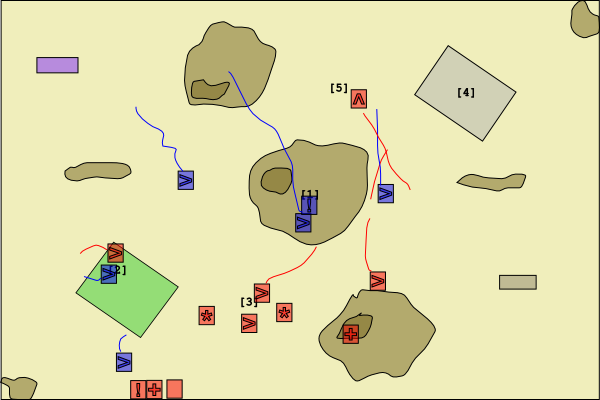
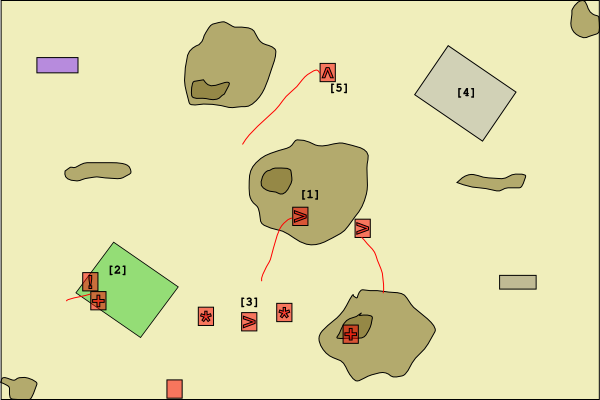
Devastators fought bravely, but were no match for the hated xenos and slowly, inexorably gave way under a gnashing nightmare of claws and teeth. Looking to save their brethren at the last moment, Sternguard under Sergeant Harbinger made an intensely perilous pod drop into home territory to shore up the beseiged left flank. They just barely managing to correct a navigation fault at the last moment and arrive safely to the battle (another half inch and they would have flown off the table and suffered a mishap), but were too late to offer much assistance to the eviscerated members of the Devastator squadron.

Genestealer squads all took heavy losses, but rushed onward, driven forward by their raging Broodlord master. The forward Marines from Tactical 1 and 3 executed a brilliant fighting retreat, stalling the Tyranid onslaught, then pummeling them in combined fire with the defending units to their rear. Many battle brothers gave of themselves bravely in this calculating gambit of attrition, but all would be redeemed if the center could simply continue to hold.

20091122-20

Turn 3

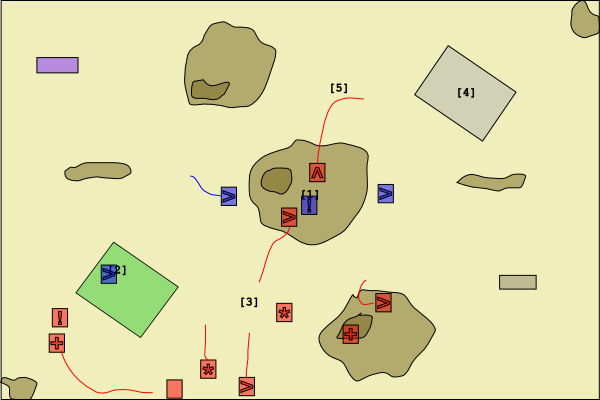
The Broodlord’s retinue of chosen Genestealers was finally eliminated in an avalanche of Heavy Bolter shells and Thunderfire Airbursts. Tactical 3’s advance Combat Squad bravely leapt into the void, challenging the xenos leader and through it the hive mind itself in a contest of wills! Meanwhile, Predator and Razorback elements of the defensive block dropped back to support Harbinger’s Sternguard and turn the tide on the left flank.

20091122-30

Turn 4

Distracted by the upstart Tactical Marines snipping at its feet, the Broodlord dropped its guard for a moment and was shredded by fire from every direction as Landspeeders and Predators as well as the Kingbreakers’ Thunderfire Cannon and Razorback disgorged untold volumes of ammunition into the beast.

The Kingbreakers’ exultation quickly returned to sobriety though as, mere moments too late to save their master, a pair of Lictors burst from the earth after tunneling dozens of clicks at tremendous speed to join the battle. Caught in the talons underfoot, Tac 3’s advance Combat Squad was all but annihilated, only one beleaguered Marine enacting a safe withdraw from their clutches.

20091122-40

Turn 5

The battle now all but decided, Harbinger’s Sternguard sweep forward to purge the alien menace on the left flank and reclaim the home objective in the temple excavation site. The unscathed Landspeeder contingent quickly swings around to similarly obliterate a small group of Genestealers attempting to retreat and make contact with the hive mind and inform it of the Imperial presence around the temple. Meanwhile, all of the Kingbreakers’ most potent venom and rage is poured like lava into the newly appeared Lictors, their death clearing the battlefield of all the Emperor’s foes, the site safe for continued study.

20091122-50

Results

Victory for the Kingbreakers, by tabling and objectives.

Notes

General observations and comments:

  • The central combat squad actually made it much longer than I thought, sealing the deal in the end game. Given that Charles decided not to deploy on the table it didn’t need to be there, but I think it was useful forcing him to not even think about deploying too near my home objectives.
  • I deployed the Devastators terribly. First of all, they shouldn’t run into cover in Dawn of War, unless they can start shooting on Turn 2. Having them in cover is obviously great, and they usually make it most of the game that way, but if it takes them two turns to get there and they’re not shooting until Turn 3, it’s probably not worth it. Better to have them run into the open and just start wailing away. Even worse, they never should have been deployed so close to the sides, enabling the Genestealers to Outflank and come in with a Turn 1 assault on them. Ditto on the Rhino. I simply hadn’t really thought about their Scout ability and the consequent Outflanking while deploying.
  • Thunderfire Cannon did a lot of damage. It definitely seems like a rock-paper-scissors unit—useless against a lot of stuff, awesome against other units. Against Chaos Marines last month it did almost nothing, as expected, but I threw it into the list again this week just in case I went up against a horde, and it turned out working out well.
  • I am still not sold about Lovell’s Tyranid army construction. I think a couple Carnifexes screened by the ‘Stealers or some ‘Gaunts and either shooting or assaulting would have been much more scary. The Genestealers cost an awful lot in points. They’ve very strong and pretty killy once in close combat, but they’re not particularly survivable on the march to get there if they can’t outflank on top of something or find enough line of sight cover.
  • Much like the Thunderfire Cannon, the Heavy Flamer on the Landspeeder and Flamers in Tac 2 and 3 paid off here. More often then not they’re not very useful, but every now and then they come through huge.
  • Missile Launchers continue to not do much on the Tac groups. Too little opportunity to shoot, not enough killing when they do.
  • Predators did awesome tearing up ‘Stealers and the Broodlord.
  • Drop Pod 1 worked great as a piece of placeable terrain to help shield my guys in the center a little bit.
  • Placement is huge, and you need a lot of Troops to hold objectives. I didn’t really lose many models this game, but I did lose just enough and get shifted out of place enough that I was very concerned at one point that newcomer Charles was going to pull off a big upset. Three Tactical Squads is just not a lot of guys to try and cover the majority of 5 objectives. Breaking into Combat Squads helps with the nominal coverage, but it’s just so easy for a five man group to get killed or at least punted off an objective. It might be worth creating space in my list for another Tactical Squad, even at 1750 points.
  • 1750 pts is probably too many points for bringing in newcomers. Although Lovell made the Tyranid list very manageable and easy to pickup, 1750 left a lot of room for random doodads on my side, meaning Charles was just continually getting hit with all sorts of funky stuff and random tricks, probably making it tough to really pick up on patterns and rules.

All in all a pretty good game, with Charles doing pretty well in his second game of 40k and first time playing Tyranids.

Tac Marines from Kingbreakers "allies" the Hive Lords standfast in the temple entrance.

Tac Marines from Kingbreakers "allies" the Hive Lords stand fast in the temple entrance.